The U.S. has no national light rail safety standards.
Notice the number of times the light rail operator couldn't stop the train in time.
Light rail crashes 2016
2016 December 29
Light Rail Kills Pedestrian (Arcadia, CA)
An eastbound Metro gold line light rail train struck and killed a pedestrian near 200 North First Avenue at 12:12am.
2016 December 28
Derailed Train Injures 44 (Rura, India)
Fifteen coaches of the Ajmer-Sealdah express train 12987 derailed at 5:20am, injuring 44 people. Eight people were in critical condition. The previous derailment in the area killed 143 passengers (November 20th).
2016 December 28
Car Stuck On Light Rail Tracks (Wythenshawe, UK)
Metrolink light rail tracks caught another car on the airport line soon after 9am. A silver Renault Clio was stuck on the tracks near Moor Road station. Buses took over for trains.
2016 December 27
Light Rail Hits Car (San Jose, CA)
A northbound VTA light rail train hit a westbound car at Market and San Carlos streets at 4:20pm. There were only seven people on the light rail train.
2016 December 27
Light Rail Kills A Young Pedestrian (Istanbul, Turkey)
A T1 light rail train operator tried the brakes to stop the train from hitting a young pedestrian at noon but was unable to stop the train in time. The body was removed from under the light rail train 45 minutes later.
2016 December 24
Fire Safety v. Commuter Train Fare Evasion (San Francisco, CA)
Fire inspectors ordered BART train station doors unbolted. The door had been bolted to decrease fare evasion.
2016 December 24
Light Rail Showers Family With Glass (Nottingham, UK)
A NET light rail train was hit on the side by a car on Meadows Way after 6:45pm. The impact shattered light rail glass, which is not safety-glass like a car's windshield. The glass shards rained on a family returning from an ice-skating trip.
2016 December 23
No Bonus For Light Rail Manager (Denver, CO)
RTD light rail manager Dave Genova will not be receiving a bonus this year due to RTD problems, most notably the failures of airport line light rail crossing signals and gates.
2016 December 23
Light Rail Tracks Damaged By Crash (Pasadena, CA)
Metro gold line light rail tracks were damaged by a truck and car crash on the 210 Freeway at 4:40am.
2016 December 22
Streetcar Hits Two Cars (Cincinnati, OH)
A SORTA Transdev streetcar hit a car and another vehicle near the intersection of Race and Elder streets before 6:30pm. A man in one of the cars was taken to the hospital with injuries.
2016 December 22
Light Rail Kills Man (Sheffield, UK)
A Stagecoach light rail train struck an 81-year-old man on Woodbourn Road at 10:10am. The seriously injured man was taken to the hospital, where he died the next day.
2016 December 20
Light Rail Trains Crash, Injuring 20 (Hong Kong)
Two MTR light rail trains crashed at the Hang Mei Tsuen station before 4:30pm, injuring 20 people. Five injured men and 15 injured women were taken to Tuen Mun hospital.
2016 December 17
Light Rail On Fire (Boston, MA)
An MBTA green line light rail train caught on fire, causing panicked passengers to flee. The light rail fire was caused by a mechanical failure in the overhead catenary power system.
2016 December 17
Light Rail Hits Man (Wythenshawe, UK)
A Metrolink light rail train hit a 45-year-old man at 5am at the Roundthorn station. He was taken to the hospital.
2016 December 16
Four Streetcars Fail in One Day (Cincinnati, OH)
Four SORTA Transdev streetcars failed today. Only one of the five streetcars didn't break down. At least two of the four breakdowns involved a failed compressor, necessary for braking, providing heat, and other important functions. SORTA told Transdev to fix the problems or they will be fired for breach of contract. “Transdev has failed to perform its services in compliance with the contract. Unless these breaches are cured within 90 days after receipt of this notice, SORTA may terminate for default under the terms and conditions of contract,” wrote SORTA President Dwight A Ferrell. Cincinnati also announced damages against CAF USA, the streetcar manufacturer, due to several issues including equipment that doesn't work in the cold. Withheld payments and liquidated damages totaled $692,200. The city also failed to analyze traffic flow: car traffic is predominantly east-west versus the streetcar’s predominantly north-south flow.
2016 December 16
Metro Train Fire (Hyattsville, MD)
A WMATA Metro orange line train caught on fire due to a brake issue before 8am.
2016 December 15
Light Rail Neck Stabbing (Santa Monica, CA)
A passenger on a Metro expo line train was stabbed in the neck before 1:30pm.
2016 December 14
Light Rail By-Passes Legislature, Then Asks For $$$ (St. Paul, MN)
The unelected Metropolitan Council decided to borrow $103.5 million in August, after the state legislature declared the $1.86 billion Southwest light rail project dead. Now Met Council announces being short $89 million over the next two years, and they threaten to cut existing transit services if they aren't given more money.
2016 December 14
Light Rail On Hold (Miami Beach, FL)
City commissioners voted unanimously to stop the light rail project. Residents who have spoken at public hearings either completely opposed the trains or only supported a route to downtown Miami.
2016 December 14
Light Rail Hits Woman (Bulwell, UK)
A NET light rail train hit a woman at the Bulwell station before 11am. The light rail operator tried to make an emergency stop but could not stop the train in time.
2016 December 14
Light Rail Breaking Safety Rules (Portland, OR)
Trimet MAX light rail recorded 1,200 safety violations last year, with violations doubling over the past four years and following a ten-year trend of increasing violations. Trimet regularly fails to investigate safety problems. “The most frequent rule violations include speeding, leaving a station before getting a 'green light' signal, or following too closely behind another train. On a per-mile basis, error rates at Trimet exceeded those of other transit agencies with light-rail systems... MAX operators, as well as their supervisors, have come to view safety violations as a normal part of operation.” [report, memo]
2016 December 14
Light Rail Racism - Racial Disparity (Portland, OR)
Black riders of Trimet MAX light rail are more likely to be banned than white riders, according to a Portland State University study for Trimet. Black passengers are estimated to be only 7% of light rail riders but are 18% of fare enforcement incidents and 22% of exclusions from riding the trains. [Trimet disparity report] Trimet was influenced by an ACLU inspired 2015 Metropolitan Council - Metro Transit (MN) report.
2016 December 14
Light Rail, Transit $$$ Hike (Salt Lake City, UT)
UTA voted a 3% operating budget increase to $387.1 million for 2017.
2016 December 14
Computer 'Glitch' Stops Light Rail (Pittsburgh, PA)
Allegheny Port Authority light rail trains were stopped from travelling downtown or to the north shore due to a computer “glitch” at the rail operating center.
2016 December 13
Light Rail Powerless (Sacramento, CA)
SacRT light rail will be powerless for days due to a driver hitting a pole which caused a “crossing arm to hit multiple overhead [catenary] power lines, completely frying all electronics at the nearby power station.” The crash happened in the intersection of Glenn Drive and Folsom Boulevard at about 7pm. Buses will take over for trains.
2016 December 13
Light Rail Hits Car (Melbourne, Australia)
A Yarra light rail train hit a blue sedan in its front right (drivers) door in the intersection of Elizabeth and Little Bourke streets at 3:30pm. Light rail trains here are smashing into other vehicles more than twice a day on average. [report]
2016 December 13
Water Stops Light Rail (Jersey City, NJ)
NJ Transit Hudson-Bergen light rail trains were stopped due to a broken water main at the corner of Washington and Essex street before 6am. Buses went around the flooding.
2016 December 12
Metro Train Decouples With Passengers (Rockville, MD)
Two 7000 series cars of a WMATA Metro red line train decoupled as the train approached the Twinbrook station before 9am. Fewer than 40 passengers were on the train at the time.
2016 December 12
Light Rail Operating Costs Increase 70% (Sydney, Australia)
While construction of the $2.1 billion, 12km light rail track continues, the expected operating costs have increased 70% and the travel time for commuters increased four minutes. The misleading operational costs were blamed on mispricing and business case omissions. The travel time increase was due to a failure to account for traffic lights. The auditor-general report summarized, “Common problems include tight timeframes without justification, project scope defined too narrowly, underestimated costs, and overestimated benefits.”
2016 December 11
Mayor's Streetcar Gravy Train (Brooklyn-Queens, NY)
Developers created a streetcar plan and pushed Mayor de Blasio to support it by donating $245,000 to the mayor's Campaign for One New York non-profit. Two Trees Management developer Jed Walentas says he dreamed up the BQX streetcar after reading a New York Times article.
2016 December 11
Light Rail Hits Car (Oldham, UK)
A Metrolink light rail train hit a car before 4:30pm, injuring a light rail passenger.
2016 December 11
358 Trees Cut For Light Rail (Canberra, Australia)
Light rail construction will remove 358 trees along the heavily wooded Northbourne Avenue, starting with 120 trees over the next two weeks.
2016 December 10
Electrical Problems Stop Light Rail (Brisbane, Australia)
A series of electrical and communication problems stopped GoldlinkQ light rail trains for two days. A circuit board was damaged by a lightning strike, which also melted fibre-optic communications cabling. It was probably a design flaw since light rail lacks safety standards. Buses replaced trains.
2016 December 10
Light Rail Stations Are Homeless Shelters (Edmonton, Canada)
ETS light rail stations were left open overnight as temperatures dropped. On December 9th, 50 people used the stations to keep warm. On December 10th, 57 people were in the stations overnight. Not that light rail stations are safe after the noose incident.
2016 December 9
Downed Power Lines Trap Light Rail Passengers (Portland, OR)
Trimet MAX light rail passengers were trapped on a powerless, dark light rail train for as much as four hours, due to downed power lines on the tracks near Gateway station.
2016 December 9
Slow Commute On Light Rail (Dallas, TX)
DART light rail has low ridership and only 20 percent of jobs are reachable in 90 minutes or less.
2016 December 8
Light Rail Installs New Payphones (Portland, OR)
Trimet installed 17 new payphones at light rail stations last year. Payphones? Wikipedia explains payphones (see also telephone booth).
2016 December 7
Light Rail Operator Sick (Didsbury, UK)
A Metrolink light rail operator became sick on Burton Road at 7:50pm. He received medical attention on the route. Buses took over for trains.
2016 December 7
Light Rail Worker Shocked (Canberra, Australia)
A Transport Canberra light rail construction worker was digging with a Hydrovac, a water-based excavation tool, and hit live cables. The electrical shock threw him two or three meters.
2016 December 7
Light Rail Funds Union Buster (Salt Lake City, UT)
The Utah Transit Authority (UTA) spent $74,000 on a union busting consultant, much more than the $46,700 previously disclosed.
2016 December 7
Light Rail Horns Interrupt Business (Denver, CO)
RTD light rail horns interrupt business every 15 minutes from 6am to 2am everyday. A family business wants a break from the noise. Implementation of a Positive Train Control (PTC) system would stop the horns, except when necessary.
2016 December 7
Light Rail Hits Car (Dublin, Ireland)
A Luas red line light rail train hit a car midday in a dangerous intersection near Tallaght Hospital. A light rail passenger was injured in the crash.
2016 December 7
Light Rail Getaway (Salt Lake City, UT)
A UTA TRAX light rail train was used as a getaway vehicle at 10:10am, after suspects robbed a 7-Eleven and punched a clerk in the face.
2016 December 7
Light Rail Signal Problems (Portland, OR)
Trimet MAX orange and yellow line light rail trains were stopped due to a signal problem and ice.
2016 December 6
Fireworks On Light Rail (Manchester, UK)
Fireworks were lit off in a crowded Metrolink light rail train by Celtics fans at the Etihad Stadium station at about 6pm.
2016 December 5
Light Rail Robbery (San Francisco, CA)
A Muni light rail passenger was robbed of a laptop at the Fifth and King street station at 10:25pm, after both women exited the light rail train.
2016 December 5
Light Rail Operator Fired For Speeding (Manchester, UK)
Metrolink took half a year to decide to fire a light rail operator due to an unreported incident in June. The Oldham line light rail operator sped through a 10mph curve near Freehold station at 28mph, injuring three passengers.
2016 December 5
Light Rail Station Nutter (London, UK)
At a light rail station, a nutter was on a rant.
2016 December 2
Commuter Train Kills Man (Evanston, IL)
A CTA purple line L train struck and killed a man near the Foster Street station at 4pm.
2016 December 1
Light Rail Hits SUV (Sacramento, CA)
A SacRT light rail train hit an SUV in the intersection of 12th and Ahearn streets before 2pm.
2016 December 1
Car Stuck On Light Rail Tracks (Wythenshawe, UK)
On the Metrolink light rail tracks, a 4-door Nissan Micra became stuck at 12:29pm. Buses took over for trains.
2016 December 1
Light Rail Hits Pickup, Injures 5 (Tempe, AZ)
An eastbound Valley Metro light rail train hit a pickup truck in the intersection of Rural and Terrace roads at 10am, injuring five people. Two of the injured people were taken to the hospital.
2016 November 30
Light Rail Drops Home Values 8% (Hampton Roads, VA)
A study of the impact of Tide light rail found the value of homes within 1,500 meters of the light rail tracks dropped eight percent. The study was conducted by the Cleveland Federal Reserve Bank. [pdf]
2016 November 30
Metro Hit Deer, Two Stations Powerless, Track Problems (Washington, DC)
WMATA Metro red, orange, blue, silver, and green line trains had a variety of problems, causing halts and delays. A red line train hit a deer. Another red line train became disabled. Fire crews inspected a smoking insulator on another section of the red line tracks. Two green line stations, Anacostia and Navy Yard, went dark in power outages. A green line train became disabled. Orange, blue, and silver line trains shared a single track due to an unspecified track problem. A medical emergency halted a blue line train.
2016 November 29
Pole Impales Light Rail (Brussels, Belgium)
On a MIVB light rail train, a towing pole broke loose from the under the train and stabbed through the floor of the train. Two people were injured. The injuries included facial lacerations. The light rail train was towed with a different towing pole.
2016 November 29
Why Light Rail Doesn't Have Crossing Gates In Downtown (Denver, CO)
A reader asked Jayson Luber at ABC-7 why RTD light rail doesn't have safety-crossing gates downtown. The simple answer is there isn't room on downtown streets for trains and safety.
2016 November 28
Light Rail Station Shooting (Swansea, IL)
At the Metrolink red line light rail station, a man was shot in the face at 8pm.
2016 November 28
Streetcar 'Third-Grade Design' Approved (Orange County, CA)
Orange County Transportation Authority board approved the design of proposed streetcar stations, after Orange County Supervisor Todd Spitzer compared the station plans to a “third-grade design competition.”
2016 November 28
Car Stuck On Light Rail Tracks (Nottingham, UK)
On the NET light rail, a car became stuck on Lenton Lane bridge tracks at about 8:50am.
2016 November 28
Businesses Sue Light Rail (Kitchener, Canada)
Devastated by Ion light rail construction, local businesses have begun lawsuits through business valuation, the Expropriations Act, and the Ontario Municipal Board.
2016 November 28
Light Rail Without A Floor (Komsomolsk-on-Amur, Russia)
Passengers ride light rail train without a complete floor. Russia and the United States lack national safety standards for light rail.
2016 November 27
Light Rail Station Shooting (Phoenix, AZ)
One man was killed and another man was in extremely critical condition from a shooting at the Valley Metro 24th and Jefferson light rail station at 8:40pm. [Update: the second man died at the hospital. The two men killed were 37-year old Cory Harrell and 46-year-old Raymond Woolfolk.]
2016 November 27
Light Rail Hits Van (Minneapolis, MN)
A Metro Transit light rail train hit a van at Hennepin and 5th Street North at 2pm.
2016 November 26
Light Rail Hits Car (San Jose, CA)
A VTA light rail train hit a BMW sedan in the intersection of North First and Taylor streets before 11:20am.
2016 November 26
Free Rides for Small Businesses?!? (Minneapolis, MN)
Now that Mai Village closed (Nov. 18), Metro Transit is offering free rides for small businesses along the green line light rail train. Why can they decide to offer random free rides?
2016 November 25-27
Light Rail Hacked (San Francisco, CA)
Muni light rail gave free rides after ticketing and payroll servers were hacked by email and locked with ransomware. Muni refused to pay, contacted FBI and DHS, and were taking fares again two days later using backup servers. [details]
2016 November 25
Judge Blocks Light Rail (Baltimore, MD)
MTA purple line light rail plans were blocked by a Federal judge after the plans failed to account for safety flaws and decreased ridership.
2016 November 25
Light Rail Bids Exceed Estimates (Tel Aviv, Israel)
Light rail bids were billions of sheckels over NTA construction estimates.
2016 November 25
Light Rail Powerless (Portland, OR)
TriMet MAX light rail trains were powerless due to a power outage. Buses replaced trains.
2016 November 25
Train Crash Kills 44, Injures 100 (Shahroud, Iran)
A passenger train crashed into another train stopped near Haft-Khan station, killing 44 and injuring 100 with many burned bodies. [Update: Three railway control center staff were arrested, and Iranian Railways manager Mohsen Poor-Seyed Aghaie resigned.]
2016 November 24
Riding A Slow, Empty Streetcar (Seattle, WA)
The Sound Transit streetcar moves slowly, is empty, and is brightly lit. It is an advertisement for the lonely on Thanksgiving.
2016 November 24
Light Rail Station Assault (Edmonton, Canada)
At the ETS Kingsway light rail station, a 13-year-old girl was assaulted by three teenagers at 3pm while others watched and recorded the beating.
2016 November 23
Smoking CTA Train (Chicago, IL)
A smoking blue line CTA train at 6pm was investigated and found not to be on fire.
2016 November 23
Light Rail Crashes Increase (Melbourne, Australia)
Light rail crashes and injuries increased in the third quarter of 2016. Light rail operators are “in a constant state of anxiety” about the risk of a crash, poised to make an impossible choice between slamming on the brakes when a car cuts into their path and risking passenger falls or crashing the train. Light rail trains hit other vehicles 711 times in the first nine months of 2016. In 2015 there were 587 light rail crashes. The crash data has sparked calls to separate trains from traffic. Professor Graham Currie says light rail operators can only “brake or accelerate... that's all you can really do.”
2016 November 23
Light Rail Apologizes... Often (Manchester, UK)
Metrolink light rail will not apologize for the number of times it apologizes. A light rail rider set up a website to keep people updated on Metrolink apologies, “Sorry for the Inconvenience.”
2016 November 22
Light Rail Station Shooting (East St. Louis, MO)
At the Metrolink Riverfront station, a man was robbed and shot in the back at 8pm.
2016 November 21
Light Rail Hits Bus (Giv'at HaMivtar, occupied territories)
A CityPass light rail train hit a bus on Sheshet Yomim Street at 7am.
2016 November 20
Bus Stuck On Light Rail Tracks (San Francisco, CA)
A morning Muni bus mistook itself for a Muni light rail train, becoming stuck on the K Ingleside light rail tracks near the intersection of Ocean and Junipero Serra.
2016 November 19
Train Crash Kills 140, Injures 180 (Kanpur, India)
An Indore-Patna express train derailed at 3am, killing 140 people and injuring 180 people.
2016 November 18
Light Rail Closes Restaurant (St. Paul, MN)
Mai Village closed its doors due to Metro Transit green line light rail construction and limiting its parking lot access.
2016 November 18
Light Rail Hits Man (Norfolk, VA)
An eastbound Tide light rail train hit a man walking south at 12:40pm near Civic Plaza.
2016 November 17
Light Rail Train Sparks, Explodes (Melbourne, Australia)
A Yarra light rail train sparked, smoked, and exploded at the intersection of Flinders and Swanston streets at 8pm, due to an overhead catenary power failure. A video was posted to YouTube three weeks later by Arafath Jiffry. Light rail trains were stopped for four hours. One observer commented, “Holy S#!*.”
2016 November 17
Light Rail Closed Due To Track Problem (Boston, MA)
MBTA green line light rail trains were replaced by buses due to a track problem.
2016 November 16
Residents Shoot Down Light Rail (Miami Beach, FL)
Light rail plans were shot down by area residents at two meetings. Plans for putting a train on the street would do nothing to fix traffic and parking problems and instead “would likely exacerbate congestion in South Beach because it would result in the elimination of a traffic lane and parking spots on Washington Avenue.”
2016 November 16
Lawsuits, Legislature May Doom $2Billion Light Rail (Minneapolis, MN)
Two lawsuits may doom the $2 billion Southwest light rail plan, which never received a vote in the state legislature and was flawed by the alternative-ignoring planning process.
2016 November 16
Light Rail Dirt Covers Neighborhood (South Los Angeles, CA)
Dirt from the Metro Crenshaw light rail construction is coating the 58th Street neighborhood. The dirt is blowing outside and inside houses. Construction noise starts at 5am and stops at 10pm.
2016 November 15
Residents Say 'No' To Streetcar (Brooklyn, NY)
At a BQX streetcar meeting, residents said “No” to the $2.5 billion floodplain infrastructure street train. Community Board 2 Transportation Committee member Bill Harris said, “I think it’s an outrageous waste of money. I can’t imagine that it’s going to pass, but in any event we have to prepare for the worst. It’s very serious. I think we all have to stand up against it.” BQX Director Adam Giambrone said, “You cannot maintain all the lanes of traffic, maintain all the sidewalk width, all the bike lanes, and all parking lanes. That’s not possible.”
2016 November 15
Light Rail False-Advertising (Sydney, Australia)
Construction of light rail tracks and stations reveal some of the false-advertising of light rail. There is nothing light about the train, its stations, or its tree-replacing concrete infrastructure. The light rail trains will be 73 yards long -- nearly a football field in length -- the longest in the world and able to block multiple downtown intersections. Mayor Clover Moore is threatening to halt a $47 million payment due to the light rail deception.
2016 November 14
Streetcar Fight (Toronto, Canada)
On a TTC St. Clair streetcar, a racially-charged fight broke out before 6pm.
2016 November 14
Expropriation Is Condemnation (Toronto, Canada)
In the U.S., government seizure of property is called condemnation or eminent domain. In Canada, it's called expropriation. Expropriation lawyer Bob Ackerman says homeowners and business owners will get more money “100 per cent of the time” if they hold out on the initial offer and force the government’s hand to expropriate. Ackerman cited a case in Innisfil, Ontario, where part of his client’s property was being turned into a GO parking lot. The client received over $1 million after originally being offered $200,000. “That was a situation where the authority was really trying to intimidate the property owner,” Ackerman told Torontoist.
2016 November 14
Buses Are The Backbone of North American Transit (Calgary, Canada)
Light rail can't compete with buses for safety, flexibility, capacity... buses can fill up a highway, operating parallel to each other and bumper to bumper.
2016 November 13
Light Rail Station Fight (Minneapolis, MN)
In the afternoon at the Metro Transit - 5th and Hennepin light rail station, five people assaulted one man, with repeated kicks to the head. [video]
2016 November 11
Light Rail Kills Man (Philadelphia, PA)
A SEPTA light rail train struck and killed a man in the intersection of Island Avenue and Lindbergh Boulevard at 4:30pm. The man may have been trying to avoid another vehicle, but the light rail train couldn't avoid hitting the man.
2016 November 11
Broken Light Rail Gates (Houston, TX)
For years, the Metro light rail crossing gates have failed, causing the gates to operate randomly. Sometimes the gates come down and stay down, blocking traffic without any light rail train. The gates are signaled by axle counters, which fail due to hot, cold, or rainy weather or metal debris. ABC13 found video of failed gates blocking emergency vehicles and vehicles forced to go around the gates.
2016 November 10
Light Rail Construction Mishap (Ottawa, Canada)
In the light rail tunnel near Laurier Avenue and Waller Street, a shocrete lift basket hooked into tunnel rebar, trapping three construction workers.
2016 November 10
Light Rail Hits Van (Dallas, TX)
A DART light rail train hit a Kia Sedona minivan at 10am on Houston Street just north of Dealy Plaza's 6th Floor Museum.
2016 November 10
Light Rail To Tear Down Restaurants (Kitchener, Canada)
Ion light rail construction will tear down the Crabby Joe's and Burger King restaurants.
2016 November 9
Light Rail Crash Kills 7, Injures 50+ (Croydon, UK)
A speeding Tramlink light rail train hit a sharp, 12mph turn and flipped over, killing seven people and injuring more than 50. The northwest-bound light rail train crashed near the Sandilands station at 6:13am. Two people were trapped for hours before being freed by emergency workers. The light rail operator was arrested and charged with manslaughter. The light rail system lacks safety mechanisms that limit speed. [Update: The light rail train was speeding at 50mph in a 12mph zone. The brakes were applied but only slowed the train to 44mph. Unsafe glass on light rail train increased fatalities. One man survived the light rail crash by having a seat.]
2016 November 8
Light Rail Station Assault, Robbery (Minneapolis, MN)
At the Metro Transit green line Stadium Village light rail station, a University student was assaulted and robbed of a cellphone at 4pm.
2016 November 8
Voting Guide: Five Reasons To Vote No To Light Rail
• sales tax increases are regressive, hurting the poor more than the rich
• light rail has no safety standards, trains don't belong on streets
• light rail does not relieve traffic congestion on roads or highways
• buses have the flexibility to serve low-density cities better than trains
• often light rail is used to destroy some businesses and homes in favor of others (condominium developers) -- developer-oriented transit (DOT)
Vote No ❌ Kansas City, Missouri - Question 3 - Failed: to raise sales taxes and shift existing tax to fund a new light rail train for a private developer. Cerner wants a light rail train from Kansas City airport to a new Cerner office park at I-435 and Bannister Road, where the Bannister Mall was torn down. Many Kansas City leaders, as well as the Kansas City Streetcar Authority, have opposed the plan, questioning its work-ability and cost. They also said the proposed light rail line wouldn’t mesh with potential expansion plans for the streetcar and would take much-needed money from the bus system.
Vote No ❌ Los Angeles, California - Measure M - Passed: raises sales tax indefinitely for $2.5 billion per year to fund Metro West Santa Ana light rail train, adding to the Measure R sales tax increase (2008-2039). Los Angeles Metro has fewer riders now than it did three decades ago, when buses were the county's only transit option. Metro has spent $9 billion of light rail trains, tracks, and subways but lost more than 10% of its riders from 2006 to 2015.
Vote No ❌ Sacramento - Measure B - Failed
Vote No ❌ San Diego - Measure A - Failed
Vote No ❌ Seattle, Washington - Sound Transit 3 - Proposition 1 - Passed (Pierce County - 56% rejected): Sound Transit built Link light rail to relieve traffic congestion. It didn't. Proposition 1 wants $2 billion each year to double Link light rail and cancel bus routes. The Smarter Transit group is against light rail, saying it's too expensive and does not increase transit ridership or decrease congestion. It advocates buses, HOV lanes, or commuter rail instead. Many towns said no (Auburn, Everett, Federal Way, Kent, Kirkland, Renton, & Sammamish).
Vote No ❌ Tigard, Oregon - Measure 34-255 - 50.3% passed by 130 votes: $3 Billion for 12 miles of light rail tracks where the population density is 6 people per acre (nowhere near 50/acre). Light rail will not reduce congestion; the average speed of light rail is the speed of bumper-to-bumper traffic. And 2015 was a record year of TriMet MAX light rail service disruptions.
Vote No ❌ Virginia Beach, Virginia - Tide extension - Failed: to raise project money previously diverted to existing light rail operating cost overruns. Surveys have found residents are concerned about light rail safety. Tide light rail has declined each year since 2013. Money would be better spent on a regional drainage system. State transportation secretary Aubrey Layne sent a letter to Mayor Will Sessoms and state officials to stop all work on the Virginia Beach light rail project.
2016 November 7
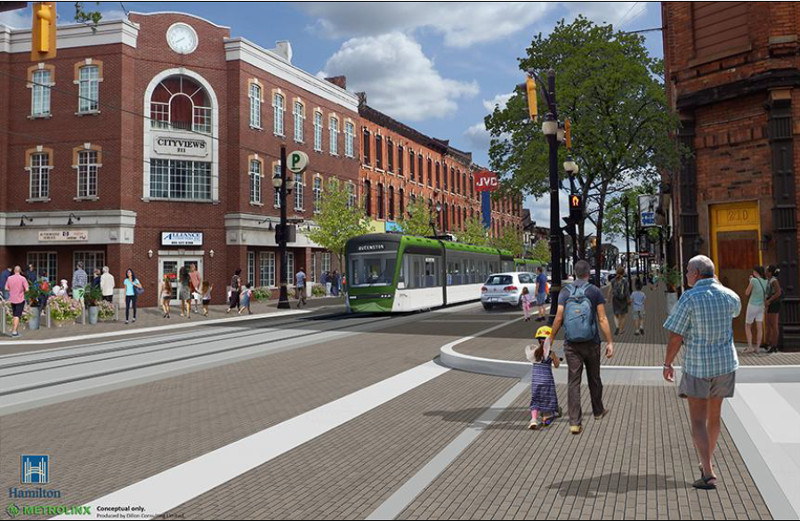
Missing Light Rail Overhead Power Lines (Hamilton, Canada)
The Metrolinx light rail plan includes fake illustrations of light rail on King and Walnut streets. What's missing is all the unsightly light rail infrastructure. The overhead catenary power lines are missing. The 21' tall power poles every 100 feet and closer on curves. The trees will have to come out because of no room for center poles on downtown streets. [picture]
2016 November 7
Subway Kills Woman Pushed (New York, NY)
A southbound number 1 subway train struck and killed 49-year-old Connie Watton, who was allegedly pushed in front of the train by 30-year-old Melanie Liverpool-Turner at 1:20pm.
2016 November 7
Commuter Train Kills Woman (Provo, UT)
A UTA Frontrunner commuter train struck and killed a woman crossing in a pedestrian crosswalk at 11:15am at 600 South 700 West.
2016 November 6
Car Stuck On Light Rail Tracks (Birmingham, UK)
Midland light rail trains were stopped for five hours due to a Mercedes sedan stuck on the Metro tracks.
2016 November 5
Light Rail Hits Vehicle (Pittsburgh, PA)
An evening light rail T train hit a vehicle in the intersection of Broadway and Neeld avenues, injuring one person.
2016 November 4
Light Rail Kills Man (San Diego, CA)
An MTS light rail train struck and killed a man at 9:30pm.
2016 November 4
Light Rail Adds Safety Improvements (Los Angeles, CA)
The nation's deadliest light rail, the Metro blue line, announced it will add signs, fences, and gates. The announcement came just days before people would vote on Measure M, which would raises sales tax indefinitely to a tune of $2.5 billion per year for more light rail and fewer buses for fewer riders.
2016 November 4
Light Rail Assault, Robbery (Melbourne, Australia)
Light rail passengers were punched and robbed at 2pm. Three weeks later, Yarra and PTV provided the news to the media.
2016 November 4
Streetcar Derails (Toronto, Canada)
An eastbound TTC streetcar derailed while turning from Queen Street East onto Church Street at 10:30am, blocking the intersection for four hours.
2016 November 4
Commuter Train Kills Man (Corona, CA)
Metrolink commuter train 703 struck and killed 22-year-old Adam Eder walking near Smith Street at 6:23am.
2016 November 4
Light Rail Window Shot (Manchester, UK)
A Metrolink airport line light rail window was shattered with a pellet gun.
2016 November 4
Light Rail Bore Pile Machine Falls On House (East Jakarta, Indonesia)
A light rail construction bore pile machine fell on a house, injuring a 5-year-old child.
2016 November 3
Streetcar Manager Resigns (Cincinnati, OH)
John Claflin, the streetcar manager, resigned citing health concerns. John Lee also resigned.
2016 November 3
Light Rail Hits Man (Calgary, Canada)
A northbound light rail CTrain struck a 44-year-old man just after 8am in the intersection of 36th Street and 20th Avenue NE. The victim was sent to the Foothills Hospital in life threatening condition. The light rail operator could not stop the train in time.
2016 November 3
Light Rail Hits Truck (Charlotte, NC)
A LYNX light rail train hit a truck at 6:15am in the intersection of South Boulevard and Hebron Street.
2016 November 2
Streetcar Scam Scammed (El Paso, TX)
City officials fell victim to email phishing scams directing $3.2 million, a majority of which was intended for the streetcar project, to fraudulent bank accounts.
2016 November 2
Light Rail Safety Waiver (Denver, CO)
RTD airport line light rail received a safety waiver from the Federal Railroad Administration allowing it to continue to operate even though the crossing gates have never worked, since opening the line in April.
2016 November 2
Existing Ridership Instead Of New Light Rail (Salt Lake City, UT)
UTA announced a renewed focus on riders instead of building new light rail lines.
2016 November 1
Jury Awards Damages From Light Rail (Phoenix, AZ)
A Maricopa County jury awarded nearly $3 million in damages to the owner of a downtown Phoenix parking lot, after Valley Metro light rail construction cut off access. Dale Zeitlin, John Garretson's attorney, said the case could make way for more legal challenges from property owners who lost value due to the construction of light rail and other government decisions that affect street access.
2016 November 1
Transit Strike (Philadelphia, PA)
SEPTA - Transport Workers Union Local 234 train and bus workers went on strike.
2016 October 31
Transit Officers Harass Blind Woman (Portland, OR)
TriMet transit officers ticketed a blind woman because they didn't believe she was blind.
2016 October 31
Light Rail Racial Discrimination (Boston, MA)
Michelle Dimanche, a former MBTA green line light rail employee, was awarded more than $2.6 million as a victim of racial discrimination when she was fired in 2013.
2016 October 31
Light Rail Racist Rant (Manchester, UK)
A Metrolink light rail racist rant was caught on video.
2016 October 30
Light Rail Derails (Boston, MA)
A slow-moving MBTA green line light rail train derailed at the Boston College Station at 3:30pm. The light rail operator switched the track while the train was still switching tracks.
2016 October 29
Train Operator Attacked (Boston, MA)
An MBTA red line train operator was asaulted by a masked man without a ticket at the Cedar Grove station.
2016 October 28
Bus Hits Light Rail (Dublin, Ireland)
A Luas red line light rail train was hit by a tour bus at Bow Street before 11am. Eight people were injured.
2016 October 27
Light Rail Hits Woman (Brookline, MA)
An MBTA green line light rail train hit a woman trying to cross the tracks near Summit Avenue at about 9:50am.
2016 October 26
Light Rail Construction Lawsuit (St. Paul, MN)
The Walsh Group, the Metro Transit green line light rail construction company, is being sued by the City of St. Paul, due to construction debris hidden in University Avenue sewers.
2016 October 26
Light Rail Cuts Children Off From Mother (Blackpool, UK)
The doors of a northbound light rail train closed between a mother and her children, leaving two children at the Rossall Square station.
2016 October 25
Light Rail Shooting (Portland, OR)
On a TriMet blue line light rail train, shots were fired at the East 102nd Avenue station at 8:34pm.
2016 October 25
New Light Rail Manager (Seattle, WA)
The latest light rail manager, Rob Gannon, promises to focus on safety, but his plans center on transit employee safety, not rider safety. Gannon's new salary will be $193,634.
2016 October 25
Streetcar Wires Down (Washington, DC)
The streetcar overhead catenary wires were hit by a forklift, shutting down the streetcar for four hours. The damaged wires were on H Street between 14th and 15th streets.
2016 October 25
Light Rail Racist Rant (Gold Coast, Australia)
A GoldLinQ light rail racist rant was caught on video and posted to YouTube.
2016 October 24
Light Rail Hits Car, Kills Woman (Dallas, TX)
A DART light rail train struck a car on South Scyene Road, killing a woman and injuring a man.
2016 October 24
Light Rail = No Fare (Minneapolis, MN)
Metro Transit says more light rail passengers aren't paying. Blue line fare evasion is up as much as 11.8% and 10.8% on the green line light rail. Both have increased since the 2014 audit. Metro Transit light rail has no turnstyles. The fare evasions don't account for all the accepted reasons for free rides:
Free rides at the airport.
Free rides on Nicollet Mall.
Free rides for children under 5.
Free rides for Wild games.
Free rides for Gopher football.
Free rides for Minnesota Lynx.
Free rides for Minnesota Swarm.
Free rides for voting.
Free rides for the art fairs.
Free rides for the winter carnival.
Free rides for the Aquatennial.
Free rides to the children's museum.
Free rides to the Holidazzle village.
Free rides for the green line opening.
Free rides for the Surly beer hall opening.
Free rides for disabled veterans.
Free rides for St. Patrick's Day, New Years Day...
2016 October 22
Light Rail Hits Car (Phoenix, AZ)
A Valley Metro light rail train hit an SUV in the intersection of Washington and 44th streets at about 12:30pm. A recent poll found Valley Metro light rail to be unsafe by 66%.
2016 October 21
Light Rail Pushes Out The Poor (St. Paul, MN)
Rents along the Metro Transit green line light rail have skyrocketed, moving poor people to other neighborhoods or to become homeless. Rents shot up 80% in 2013 and 60% in 2015. Transit-oriented development and gentrification are eviction notices.
2016 October 21
Transit Execs Skip Crash Hearing (Trenton, NJ)
New Jersey Transit executives skipped a legislature meeting investigating the September 29th Hoboken terminal crash that killed one person and injured more than 100.
2016 October 21
Train Derailment Kills 79, Injures 600 (Eseka, Cameroon)
A passenger train with a capacity of 600 derailed while carrying 1,300 people. The derailment killed 79 and (officially) injured 600.
2016 October 21
Bombardier Cuts 7,500 More Jobs (Montreal, Canada)
Two-thirds of the 7,500 more jobs Bombardier are cutting are in their train division.
2016 October 20
Metro Trains Nearly Run Over Safety Inspectors (Washington, DC)
FTA safety inspectors were nearly run over by two speeding Metro trains near Reagan National Airport. The morning train operators failed to slow down or stop for the track crews and speed restrictions.
2016 October 19
Track Switching Problem Causes Delays (San Francisco, CA)
A switching problem on BART tracks near the Embarcadero station caused major delays during the morning commute.
2016 October 18
Passenger Train Hits Car, Hit By Car (Irwindale, CA)
A Metrolink San Bernardino line 336 train hit a Nissan Altima, rear-ended by a Hyundai Tiburon, on Irwindale Avenue at about 10:40pm. The 43-year-old Nissan driver escaped the car before it was hit by the train.
2016 October 18
Metro Transit Officers Arrest Girl For Chips, Lollipop (Washington, DC)
A group of Metro transit officers kicked and arrested a 17-year-old girl for having potato chips and a lollipop at the at Columbia Heights Metro station at 6:35pm. [video]
2016 October 18
Light Rail Drags Man (Saratov, Russia)
A KTM light rail train dragged a 27-year-old man 500 meters after his foot became caught in the doors. [video]
2016 October 17
Light Rail Cuts Off Access To Shops (Kitchener, Canada)
Light rail has cut off access to stores, services, and jobs on Fairway Road.
2016 October 17
Light Rail Kills Man (Los Angeles, CA)
A Metro expo line light rail train struck and killed a man at 2031 West Exposition Boulevard just before 11am.
2016 October 17
Train Door Malfunction (Oakland, CA)
A westbound BART train was running with an open door during the morning commute, causing delays.
2016 October 17
Light Rail Knife Fight (Long Beach, CA)
On the Metro blue line light rail train, two women got into a knife fight near the Fifth Street station at 8am.
2016 October 17
Light Rail Lacks Riders (Portland, OR)
Trimet MAX orange line light rail only has 65% of the promised ridership, short 6,000 people per day.
2016 October 17
Light Rail Station Mistakes (Kitchner, Canada)
Concrete platforms at Ion light rail stations were torn out due to measurement mistakes. The cost of mistakes are built-in.
2016 October 17
Red, Green Lines Offensive (Ottawa, Canada)
Red and green transit lines and names are offensive and problematic to people with red-green color blindness, says color blind advocate.
2016 October 16
Light Rail Costs Balloon To Over $3.5 Billion (Sydney, Australia)
The cost of the Parramatta light rail has risen to over $3.5 billion, $2.5 billion more than the budgeted $1 billion.
2016 October 15
Light Rail Operator Hit (Zurich, Switzerland)
A light rail operator was punched by a scooter driver at 9pm.
2016 October 15
Trees Stop Light Rail (Portland, OR)
Trimet MAX blue line light rail trains were stopped due to downed trees. Buses took over for trains.
2016 October 14
State Supreme Court Hears Anti-BRT Case (Salt Lake City, UT)
The Utah supreme court heard arguments on an anti-BRT case being directed to them due to quick, premature construction by the Utah Transit Authority (UTA).
2016 October 13
Special Bus Not Wanted (Woodbury, MN)
Gateway Corridor planners took miles off their dedicated bus line because no one wants it. Lake Elmo doesn't want it. Woodbury developers at the old State Farm campus don't want it. So the latest plan for the gold line BRT has it turning south on Bielenberg Drive in a backwards-C shape and heading to the movies at Woodbury Theatre. The gold line will cost $460 million for hardly any riders. [David Peterson at the Star Tribune incorrectly reported the bus will cost “$25 million” and go to the “Woodbury Theater.”]
2016 October 13
Light Rail Derailments (Boston, MA)
MBTA green line light rail trains derailed seven times in 2015 and five times so far in 2016. Poor rail and wheel maintenance as well as speeding by light rail operators were blamed for the derailments.
2016 October 12
Light Rail Taught Credibility, Openness (Salt Lake City, UT)
The Utah Transit Authority (UTA) board held a five-hour meeting with a four-hour lesson on credibility and openness. Board members questioned how they could talk openly in an open meeting.
2016 October 12
Streetcar Hits Car (Cincinnati, OH)
A northbound streetcar hit a westbound, blue Nissan Maxima in the intersection of Main Street and East Central Parkway at 11:55am.
2016 October 9
Blue Line Train Robberies (Chicago, IL)
A series of CTA blue line train assault and robberies happened on September 19th, October 3rd, 7th, and 9th. Passengers were hit by three men and possessions were taken from the victims' pockets.
2016 October 9
Cat Stops Subway (Manhattan, NY)
The MTA 7 train was held up for a cat on the subway tracks at 5th Ave near 42 Street.
2016 October 9
Light Rail Hits Car (Surfers Paradise, Australia)
A G-link light rail train hit a red 4-door car on Gold Coast highway at 11:45am, injuring the driver.
2016 October 9
Light Rail Station Shooting (Jerusalem - al-Quds)
Shots were fired at the divisive CityPass light rail Ammunition Hill station before 10:15am in the Shimon HaTzaddik occupied territory.
2016 October 8
Train Crash & Derailment Injures 33 (Long Island, NY)
An eastbound Long Island commuter train hit part of an adjacent maintenance train at 9:15pm, causing three carriages of the 12-carriage train to derail. The train crash injured 26 passengers and five employees on the commuter train and two on the maintenance train.
2016 October 8
Light Rail Stabbing (Manchester, UK)
On an eastbound Metrolink light rail train, a 36-year-old man was stabbed in the neck at 6:50am. The injured man was taken to the hospital.
2016 October 7
Light Rail Hits Car (Croydon, UK)
A Tramlink light rail train hit a car on Addiscombe Road during the evening rush hour.
2016 October 7
When Will Riders Want Light Rail? (San Diego, CA)
The Metropolitan Transit System wonders if a $2.1 billion extension might get riders off other transit and onto light rail trains. They want riders to vacate their seats on commuter rail and buses and stand on slow-moving light rail trains on streets. Transit = train-sit not train stand. The project has been met by wide-spread resistance.
2016 October 6
Light Rail Separates Children From Parents (Nottingham, UK)
A NET light rail operator closed train doors between parents and two children, leaving the children at the station.
2016 October 6
Light Rail Hits Van (Nottingham, UK)
A NET light rail train hit a van in the busy intersection of Goldsmith and Peel streets just before 9am.
2016 October 6
SUV Blocks 3 Light Rail Lines (Portland, OR)
Trimet MAX blue, green, and red light rail trains were stopped due to a 2005 Subaru Forester SUV stuck on the tracks by the Gateway station at 3:35am. A crane was brought in to remove the vehicle from the tracks.
2016 October 5
Ambulance Blocks Light Rail (Croydon, UK)
Tramlink light rail trains were stopped due to an ambulance blocking George Street at 4:12pm. A man had fallen on the street, and the ambulance was attending him.
2016 October 5
Light Rail Hits Car (Broadbeach, Australia)
A G-link light rail train hit a car in the intersection of the Gold Coast Highway and Victoria Avenue at 3:20pm. The injured driver of the car was taken to the hospital.
2016 October 5
Light Rail Hits Van (Melbourne, Australia)
A Yarra light rail train hit a van on Collins Street at 11am.
2016 October 4
Light Rail Layoffs Switch Tracks To Hiring (St. Louis Park, MN)
The Metropolitan Council threatened to lay off 45 Southwest light rail planners in August but now plans to hire 71 more bodies. The new hires are expected to add pressure to the state legislature to fund Southwest light rail, which has never had a vote by the state government. A job fair is scheduled at Park Place West, 6465 Wayzata Blvd, St. Louis Park on Tuesday, October 18th from 3pm to 6pm.
2016 October 4
Streetcar Derails (New Orleans, LA)
Two days after opening, the Rampart-St. Claude streetcar derailed at 9am in the intersection of North Rampart and Canal streets. The passengerless streetcar was turning the corner when it split the switch. Justin Augustine III, general manager of the New Orleans Regional Transit Authority and vice president of Transdev, the private firm that runs the RTA's operations, said, “Nothing is wrong with the tracks or the switch or the actual construction.”
2016 October 4
Runaway Streetcar (Cincinnati, OH)
A empty SORTA streetcar 1175 rolled out of the maintenance yard on Henry Street at 8:30am, rolling down the tracks, turning against traffic on Elm Street, and ultimately stopping in front of the Rhinegeist Brewery. [map] A SORTA spokeswoman said the streetcar's cameras didn't record the incident.
2016 October 4
Removing Street Tracks After Bicyclist Broke Jaw (Philadelphia, PA)
The wheel of a bicycle skidded on pavement-embedded light rail tracks, causing a bicyclist to fall off her bike, breaking her jaw. Three years later, Katie Monroe is working to get old tracks removed and educating people of the dangers of pavement-embedded train tracks.
2016 October 3
Light Rail Derails (Boston, MA)
An MBTA green line light rail train derailed at about 7pm at Copley Station.
2016 October 3
Wrong Turn On Light Rail (Calgary, Canada)
A wrong turn onto the C-train light rail tracks was made by the driver of a BMW at 11:20am. Better signage or crossing bars have been suggested.
2016 October 2
Light Rail Station Fatal Stabbing (Seattle, WA)
At the Tukwila Link light rail station, one man stabbed another man before 8:40pm. The stabbed man, 29-year-old Jesse Gonclaves, was rushed to the Harborview Medical Center, where he was pronounced dead.
2016 October 2
UTA Begins Era Of Transparency, But Not Elections (Salt Lake City, UT)
Utah Transit Riders Union is once again calling for the quasi-public Utah Transit Authority (UTA) board to be elected rather than appointment. Governor Gary Herbert and new UTA board appointee Greg Bell (former Lt. Gov.) agree the UTA must begin an era of transparency. Soooo... back on August 23rd, a woman with disabilities was left on a bus for five and a half hours.
2016 September 30
Woman Injured After Falling On Light Rail Tracks (Croydon, UK)
A woman was injured after falling on the light rail tracks on George Street before 8:07pm. She was rushed to the hospital.
2016 September 30
Light Rail Hits Man (Seattle, WA)
A southbound Sound Transit Link light rail train hit a man in the intersection of Martin Luther King Jr. Way South and South Graham Street at 7:30pm. The injured man was taken to Harborview Medical Center in serious condition.
2016 September 30
Two-Thirds Majority Needed To Kill Light Rail (Hamilton, Canada)
A two-thirds majority reconsideration vote of the city council would be needed to stop the billion dollar light rail plan. Six city councilors, a little more than one-third, are in favor of the LRT plan to nowhere.
2016 September 29
Sinkhole Stops Streetcar (Atlanta, GA)
The problem-plagued streetcar was stopped for two days due to a sinkhole on Edgewood Avenue between Jesse Hill Drive and Bell Street. Buses took over for trains.
2016 September 29
Man Rides Outside Light Rail (Sheffield, UK)
A man rode on the back of a light rail train, holding on to the windshield wiper. [video]
2016 September 29
108 Injured, 1 Killed As Train Hits Station (Hoboken, NJ)
The derailed New Jersey Transit Pascack Valley 1614 train struck the Hoboken station from track 5, collapsing part of the roof at 8:45am, injuring 108, and killing one woman. New Jersey Transit does not have positive train control (PTC), which could reduce the speed of a speeding train.
2016 September 29
Light Rail Chops Down 60 More Trees (Surry Hills, Australia)
Yarra light rail construction will cut down 60 more trees.
2016 September 28
Light Rail Hits Man, Injures Legs (East Dallas, TX)
A DART light rail train struck a man, injuring his legs. One story is he was walking on Main Street when the light rail train hit him, dragging him 200 yards and severing his legs. Another story has a light rail train hitting a man lying on the tracks near the intersection of Exposition Avenue and Elm Street, badly injuring his legs. Or two men were hit.
2016 September 28
Subway Kills Blind Man (Philadelphia, PA)
Southbound SEPTA Broad Street subway 524 struck and killed a blind man at the Race Vine station at 4:30pm. The 53-year-old man had stumbled, hit a pole, and fell on the tracks, before he was run over by the train.
2016 September 28
Child Injured After Falling On Light Rail Tracks (Croydon, UK)
A child fell on the light rail tracks at 4:22pm at Crown Hill. The injured child was taken to the hospital.
2016 September 28
Light Rail Doesn't Stop For Passengers (Melbourne, Australia)
Yarra Trams route 11 light rail trains were reported not stopping at stations for passengers at about 2:45pm. “Taking the public out of public transportation.”
2016 September 27
Light Rail Kills Man (Salt Lake City, UT)
A UTA TRAX light rail train struck and killed a man near 1700 South and 250 West at about 11pm.
2016 September 27
Light Rail Hit With Rocks (Jerusalem - al-Quds)
The divisive CityPass light rail train was hit with rocks in the evening.
2016 September 27
Light Rail Breaks Down Again (Bukit Panjang, Singapore)
A light rail signal joint failure damaged LRT current collector devices. These failures and another track fault caused two days of light rail shutdowns.
2016 September 27
Passengers Trapped On Train For 3+ Hours (Toronto, Canada)
A Metrolinx Go train stopped due to mechanical issues after 4:30pm. Passengers sat on the stopped train for more than three hours until another train began to push the failed train. Metrolinx promises to give a $100 credit to its customers who used Presto.
2016 September 27
Light Rail Increases Crime (North Phoenix, AZ)
Residents blame Valley Metro light rail for an increase in crime around the train line. A Phoenix official said it was just a coincidence that the break-in's increased with the opening of light rail in the area.
2016 September 27
Light Rail Hits Man (Vienna, Austria)
While a fight took place in the street, a light rail train plowed through, hitting a man and seriously injuring his legs.
2016 September 26
TriMet Gives $3,150 But Wants It Back (Portland, OR)
A TriMet light rail operator was given $3,150 in workers compensation in July 2012. Now, more than four years later, TriMet wants the money back from light rail operator Phillip X. Emerson.
2016 September 26
Light Rail Hits Car (Phoenix, AZ)
A Valley Metro light rail train hit a car in the intersection of 32nd and East Washington streets at 11am.
2016 September 26
Light Rail Protests (SeaTac, WA)
While Sound Transit threw another party for itself, residents protested the planned destruction of a mobile home park and the gentrification of the area by the Angle Lake light rail station.
2016 September 26
Streetcar, Dump Truck, Taxi, Car Collide (Toronto, Canada)
TTC streetcar 4138 was hit by a dump truck, after a white Chevy Cruz had hit a taxi, then the dump truck, and then a pole at Dufferin and Liberty streets at 10am. The streetcar had no passengers. The truck driver was taken to the hospital with injuries.
2016 September 26
Commuter Train Bedbugs, Lice Infestation (Chicago, IL)
On a southbound CTA red line train near Belmont, an infestation of bedbugs or lice were crawling onto commuters at about 9am.
2016 September 26
Streetcar Machines Fail (Toronto, Canada)
TTC says many Presto card reading machines on streetcars aren't working. Maybe that's why they're rarely used.
2016 September 26
Light Rail Hits Truck, Derails (Valenciennes, France)
A light rail train hit the back of a truck and derailed at 9:10am. The derailed train hit a light pole which fell on a waiting car. The pregnant train operator was taken to the hospital as a precaution.
2016 September 26
Light Rail Kills Motorcyclist (Los Angeles, CA)
A Metro expo light rail train struck and killed a motorcyclist in the intersection of Washington Boulevard and Flower Street before 1:30am. The light rail train finally came to a stop several blocks away at the intersection of Flower and 30th streets.
2016 September 25
Light Rail Hits Car (Broadbeach, Australia)
A G-link light rail train hit a white SUV in the intersection of Gold Coast Highway and Hooker Boulevard at midnight.
2016 September 24
Light Rail Breaks Water Main (Edmondton, Canada)
Light rail construction broke a water main at 6pm, flooding Jasper Avenue between 95 Street and 95A Street.
2016 September 24
Train Crash Injures 90, Kills 1 (Boudouaou, Algeria)
An eastbound train to Setif hit an eastbound train to Thenia at 4pm, killing one and injuring 90.
2016 September 24
'Vote No Light Rail' Signs (Virginia Beach, VA)
Lawn signs say “Vote No Light Rail” are appearing along larger Virginia Beach roads. City Treasurer John Atkinson says, “What we have is a $310 million dollar railroad that’s gonna go 3.2 miles, and according to the city’s study, it’s gonna transport 1100 people a day in 2034. That’s less than three-tenths of our population would use it. Well three-tenths is not a valuable service to our citizens, it’s too small. Nobody’s gonna use it.” [contribute]
2016 September 24
26 Minutes To Cross Light Rail (Seattle, WA)
A pedestrian tried to cross Sound Transit light rail tracks at Martin Luther King Jr. Way and Genesee Street. It took more than 26 minutes for Adam Dodge to cross light rail tracks after pushing the pedestrian crossing button. [video]
2016 September 24
Light Rail Fire (Blackpool, UK)
A light rail rooftop electrical fire spread to the interior of the car on King Edward Avenue. [video]
2016 September 24
Transit Plan = Corporate Welfare (Indianapolis, IN)
Proposal for a 127% tax increase for IndyGo aims to help the commuting problems of FedEx employees without raises from FedEx.
2016 September 23
Light Rail Costs Up, Don't Know How High (Vancouver, Canada)
The Mayors' Council wants to raise property taxes for light rail trains, but doesn't know how much they need. TransLink knows the costs have increased over the old $2.14 billion estimate. TransLink doesn't know how high the costs have risen, or they are waiting for a politically opportune moment to spring the news.
2016 September 23
Light Rail Brawl (Belgrade, Serbia)
On a GSP light rail train, three men, a woman, and a baby fought. [video]
2016 September 22
Light Rail Construction Crane Collapses (Tel Aviv, Israel)
At a light rail construction site on Lavontin Street, a construction crane collapsed.
2016 September 22
Light Rail Hits Woman (Moscow, Russia)
A Mosgortrans light rail train on Rusakovskaya Street struck and killed a woman distracted by her phone.
2016 September 21
Light Rail Executive Needs No Interview Or Resumé (Dallas, TX)
Dallas Area Rapid Transit (DART) board chairman Robert W. Strauss asked for a paid job with DART. A new six-figure job was created for Strauss without his submitting a resumé or competing with other job candidates, according to documents obtained by the Dallas Morning News. Strauss quit the board in March and in May was hired as a newly-created vice-president of transit-oriented development with a $167,700 salary.
2016 September 20
Light Rail Station Theft (Bayonne, NJ)
At the NJ Transit 45th Street light rail station, a man stole another man's backpack at about 10pm.
2016 September 20
Light Rail Green Line Removes Trees (Boston, MA)
MBTA green line light rail removes trees and tree limbs.
2016 September 20
Light Rail Derails (Calgary, Canada)
A nearly-empty light rail C-train derailed during morning rush hour, seriously injuring the operator. The northwest-bound light rail train left the tracks with two passengers at 7am and crashed into a pole holding up the overhead catenary wires which power the train.
2016 September 19
Light Rail Reneges On Transparency (Salt Lake City, UT)
The un-elected Utah Transit Authority (UTA) reneged on its transparency promise to keep its board and committee meetings open. A board member said a committee meeting took place but then disavowed that statement, saying instead it was an informal discussion between committee members. Due to the secretive meetings, the Utah Transit Riders Union called for the UTA board to be elected by voters and not appointed by state and local groups. [overview editorial]
2016 September 19
Light Rail Kills Man (Dallas, TX)
A DART light rail train struck and killed a man at the Royal Lane crossing at 6am.
2016 September 17
Light Rail Hits Car (Habsburg, Austria)
A line 2 light rail train hit a car at 3:30pm, injuring a passenger.
2016 September 17
Commuter Train Kills Person (Mississauga, Canada)
A Metrolinx lakeshore west Go transit commuter train struck and killed a person before 3:30pm by Shawnmarr Park near Queen Street West and Shawnmarr Road.
2016 September 17
Light Rail Hits Cyclist (Kaohsiung, Taiwan ROC)
A new light rail train, which just opened in July 2016, hit a 74-year-old cyclist at 10:40am near the Dream Mall.
2016 September 17
Light Rail Hits Car (Noble Park, Australia)
A Metro light rail train hit a car at the Chandler Road level crossing at about 7:30am. This is one of several level crossings scheduled to be re-engineered with a bridge or tunnel.
2016 September 16
Commuter Train Kills Boy (Newton, MA)
An MBTA Worcester commuter train struck and killed a 14-year-old boy at 8:45pm near the West Newton off ramp.
2016 September 16
Muddy Landslide Derails Train (Watford, UK)
A southbound Network Rail passenger train derailed at 6:19am after mud oozed over the train tracks. A northbound train hit the derailed southbound train with “a glancing blow.”
2016 September 15
Train Crash Kills 6, Injures 150 (Multan, Pakistan)
A freight train stopped after killing a pedestrian crossing the tracks at 2am. A passenger train ran a red signal light and slammed into the freight train. The train crash destroyed the first four of ten passenger train cars, killing at least six and injuring 150 more.
2016 September 14
Light Rail Kills Business (Aurora, CO)
RTD light rail construction killed Señor Miguel’s. Owner Miguel Morales is packing up the 16-year-old restaurant and moving it several blocks away from the future light rail R line. Morales said, “This light rail killed my business.”
2016 September 14
Transit Police Use Baton To Hit A Man 15 Times (Houston, TX)
At the Metro Burnett light rail station, transit police officer Jairus Warren was accused of using excessive force when beating a man on a bench 15 times with a baton.
2016 September 14
Light Rail Hits Woman (Portland, OR)
A westbound Trimet MAX light rail train struck a woman in the intersection of 143rd Avenue and East Burnside Street at 4:15pm.
2016 September 14
Commuter Train Kills Two Women (Surrey Hills, Australia)
A Hyundai car became trapped by train crossing gates at the Union Road level crossing before 4pm. A Metro Xtrapolis commuter train slammed into the car, ripped it in two, wedged it beneath the train wheels, and dragged it 164 yards (150 meters) down the tracks. The train crash killed the two women in the car. Rail union secretary Marc Marotta said, “There’s a sharp left-hand curve. The driver would not see [the car] until about 200 meters. A 300-plus ton train doing 80kmph... you can’t stop. You have no hope.” The government is spending billions of dollars to remove 50 of the 180 level crossings but not this one. [photo]
2016 September 14
Police Officer Hits Train Operator (New York, NY)
An off-duty NYPD officer hit an MTA J train operator at 9:13am, after her door hit him.
2016 September 14
Commuter Train Kills Man (Suitland, MD)
A WMATA Metro green line commuter train without passengers struck and killed a man at 5:10am near the Suitland station.
2016 September 13
Light Rail Hits Car (Dallas, TX)
A northbound DART red line light rail train hit a Chevy Malibu in the intersection of North Olive and Bryan streets at 8:20pm.
2016 September 13
Lightning Hits Light Rail (Manchester, UK)
Lightning struck two Metrolink light rail electrical substations, halting trains throughout the city before 6:30pm.
2016 September 13
Light Rail Power Failure (Melbourne, Australia)
Yarra light rail trains were stopped due to power failures at two electrical substations.
2016 September 13
Light Rail Stops For Tree (Salt Lake City, UT)
UTA TRAX light rail trains were stopped due to a downed tree in West Valley starting at 5:30pm.
2016 September 13
Boy Shot At Light Rail Station (Pittsburgh, PA)
At the Wood Street T light rail station, a 17-year-old boy was shot at 4:10pm.
2016 September 13
Light Rail Hits Fire Truck (Boston, MA)
An MBTA green line light rail train tried to “sneak by” a fire truck, hitting the fire truck with the side of the train by a door. The collision happened on South Huntington Street at 7:30am. Buses took over for trains.
2016 September 13
Light Rail Train Breakdown (Nottingham, UK)
A NET light rail train broke down, stopping other trains.
2016 September 13
Commuter Train Derails (Hertford, UK)
A slow-moving, passengerless Great Northern train derailed at Hertford station, blocking both platforms. It can not be re-railed until after all other trains have halted, causing a logjam on the system.
2016 September 12
Car Stuck On Light Rail Tracks (Norfolk, VA)
Hampton Roads light rail tracks caught a car at 7:55pm. The car drove onto the at-grade tracks at Botetourt Street and Brambleton Avenue. Light rail trains were stopped for an hour.
2016 September 12
Commuter Train Hits Metal Cart (Braintree, MA)
An MBTA red line commuter train hit a metal cart left behind by construction contractors, disabling the train for nine hours. Buses replaced trains.
2016 September 12
Light Rail Sells 11 Tickets (Santa Clara, CA)
VTA light rail only sold 11 express tickets for 2016 San Francisco 49ers games at Levi's Stadium. The $149 tickets are five times more expensive than regular tickets. The express light rail trains can be as slow as regular light rail trains if the express trains get stuck behind regular light rail trains. VTA light rail lost $500,000 in 2014 and 2015, due to extra trains and overtime for the 49ers games.
2016 September 11
Light Rail Elevators May Be Repaired By 2021 (San Francisco, CA)
Many of the 52 Muni light rail elevators are broken, having not seen major upgrades since the 1970s. SFMTA has made a five-year $6.6 million agreement, split between two companies, for major elevator and escalator upgrades at four stations. Planned replacements include door operators, landing doors, cab doors, door tracks, sills, and sill angles.
2016 September 10
Mini Train Hits Tractor, Derails (Dymchurch, UK)
A miniature RHDR steam train hit a farm tractor at a level crossing and derailed, with one carriage collapsing on its side. Five people were injured.
2016 September 9
Commuter Train Kills Man (San Francisco, CA)
A BART train struck and killed a man at the 16th Street Mission station at 7:22pm. Trains were stopped for two hours.
2016 September 9
Train Derails: Kills 4, Injures 47 (O Porriño, Spain)
A passenger train derailed, killing 4 and injuring 47 of the 65 people on the train. The train operator was one of the four killed in the derailment.
2016 September 9
Train Operator Threatened (Washington, DC)
A WMATA Metro green line train operator was threatened with a knife for going too slow.
2016 September 9
Light Rail Project Strands Koala (Gold Coast, Australia)
A koala was stranded by G-link light rail construction along Olsen Avenue near the Smith Motorway. The government said it will not relocate the koala. The light rail tourist train is being built for the 2018 Commonwealth Games.
2016 September 9
Light Rail Hits A Car Every Other Day (Augsburg, Germany)
Augsburger Trambahn light rail trains hit cars 148 times in 2015 or about every other day.
2016 September 8
Kitten Stops Subway (New York, NY)
The MTA A-train was stopped at the 175th Street station for an hour starting at 10:50am, due to a hunt for a small kitten.
2016 September 8
Streetcar Hits Car (Washington, DC)
A streetcar hit a car in the intersection of 17th Street and Benning Road NE at 8:30am. The streetcar had no passengers.
2016 September 8
Light Rail Power Lines Down (Dublin, Ireland)
While buses were on strike, Luas light rail catenary power lines were down at the Laughanstown station, preventing light rail green line trains from operating between Brides Glen and Carrickmines.
2016 September 7
Light Rail Hits Two People (Sheffield, UK)
An SYPTE stagecoach light rail train hit two people on Infirmary Road at about 10:30pm.
2016 September 7
Train Derails: Kills 5, Injures 27 (al-Ayat, Egypt)
A passenger train derailed, killing 5 and injuring 27 of the 35 people on the train. The train operator was detained on charges of murder and attempted murder.
2016 September 7
Light Rail Power Outage Leaves Riders Stuck (Kuala Lumpur, Malaysia)
Light rail trains were powerless all along the Kelana Jaya LRT line, starting at 7am.
2016 September 6
Commuter Train Kills Teen (Boston, MA)
An MBTA Worcester commuter train struck and killed a 17-year-old student from China before 11:40pm. He was a Boston University freshman, and this was the first day of classes. Suicide hotlines: 1-800-273-8255 (1-800-273-TALK) or 1-800-SUICIDE (1-800-784-2433).
2016 September 6
Light Rail Kills Man (Sacramento, CA)
A SacRT gold line light rail train struck and killed William Vickers, 78, who was crossing the light rail tracks at 3:14pm in College Greens.
2016 September 6
Commuter Train Hits Truck, Injures 21 (Sun Valley, CA)
A southbound Metrolink 212 Antelope Valley commuter train hit a truck, injuring 21 people from the train at 10:35am.
2016 September 6
New Streetcar As Slow As A Bicycle (Cincinnati, OH)
FOX19’s Ken Brown bicycled the streetcar loop in 31½ minutes, the same time as a streetcar.
2016 September 6
Metro Derailment, Brake Failure, Door Failure (Washington, DC)
WMATA Metro trains were slow or stopped due to:
1. A derailed high-rail excavator on the orange line at 4am
2. The evacuation of a red line train due to a brake problem at 7:25am
3. The evacuation of an orange line train due to a door problem at 7:35am
4. All of the above
2016 September 5
Passenger Train Runs Red Light (Aldershot, Canada)
An eastbound VIA passenger train ran a red light meant to prevent a collision with a Metrolinx Go passenger train at 5:13pm. The VIA train ultimately stopped for 75 minutes. The roughly 50 passengers were never told what actually happened, just that the delay was an unspecified service condition.
2016 September 5
Light Rail Hits Car (Wilford, UK)
A NET light rail train hit a blue car on Wilford Lane at 2pm. One passenger on the train was injured and taken to the hospital.
2016 September 5
Light Rail Operator Puts Drunk By Tracks (Novosibirsk, Russia)
A Burginskaya Roshcha light rail operator dragged a drunk man from the train, leaving him close to the tracks.
2016 September 2
Screeching Train Wheels May Be Improved (San Francisco, CA)
After 44 years of screeching metal wheels against rails, BART engineers have decided tapering two millimeters off the inner wheels may reduce the screeching and reduce rail wear. Will quieter trains sneak up on unsuspecting pedestrians?
2016 September 2
Light Rail Passengers Throw Water Bottle, Abuse (Nottingham, UK)
On a NET light rail train before 4:30pm, two men threw a water bottle at a woman and made abusive comments at other passengers.
2016 September 2
Two On Light Rail Platform Hit By Car (Phoenix, AZ)
Waiting at a Valley Metro light rail platform at Camelback Road and 7th Avenue, two people were hit by a car before 2am.
2016 September 1
Bombardier Misses Another Light Rail Deadline (Toronto, Canada)
While Bombardier laid off aircraft workers, it missed another light rail train delivery deadline.
2016 September 1
Light Rail Hits Police Car (Salt Lake City, UT)
A TRAX light rail train hit a West Jordan police car at 3:40pm at 1500 South Campus Drive. The police officer was taken to the hospital.
2016 September 1
Light Rail Wants British Behavior (Jerusalem - al-Quds)
The divisive CityPass light rail wants passengers to behave like the British. CityPass doesn't understand how British passengers behave:
► Shouting racial abuse (2016 June 28 & January 20)
► Biting & punching train operators (2016 May 7)
► Fighting (2015 December 30 & September 5)
► Pushing a woman in front of an oncoming train (2015 November 10)
► Stopping the train to walk the tracks (2015 September 26)
And al-Quds and Manchester light rail trains have been hit with equally many rocks.
2016 September 1
Metro Station Roof Crumbling (Washington, DC)
At the WMATA Metro red line Rhode Island Av station, crumbling concrete and a metal bracket fell from the ceiling near an escalator. [Update: more ceiling falling down.]
2016 September 1
Transit Excuse Generator (Boston, MA)
MBTA Excuse Generator is launched to explain light rail and commuter train delays.
2016 September 1
Payments Withheld From Light Rail Operator (Denver, CO)
RTD has withheld more than $827,500 from Denver Transit Partners due to problems with the $1.2 billion A-line light rail trains. Signalling failures, power surges, and unreliable crossing gates have been some of the problems that have caused repeated light rail shutdowns.
2016 August 31
Light Rail Appointees Write Themselves An IOU (St. Paul, MN)
The unelected Metropolitan Council wrote themselves an IOU for $103.5 million, after the state legislature declared the $1.86 billion Southwest light rail project dead. The Met Council will use that IOU to prove to the FTA that the project has local support to ask for $900 million in federal funding. Nationally, these IOUs (certificates of participation) have been accepted by the FTA for buses, which were considered leased capital.
2016 August 31
Man's Body Found At Light Rail Tracks (Jersey City, NJ)
NJ Transit police reported a man's body was found along the light rail tracks near Martin Luther King Drive at 9pm.
2016 August 31
Light Rail Brakes Fail (Littleton, CO)
RTD light rail trains C and D were shutdown due to brake failures and smoke.
2016 August 31
Light Rail Hits Dump Truck (Houston, TX)
A southbound Metro light rail train hit a dump truck in the intersection of Old Spanish Trail and Martin Luther King Jr Blvd at 11:40am. “The train operator hit the horn and tried to stop but couldn't,” a passenger said. The truck driver and several others were injured.
2016 August 31
Toddler Solves Light Rail Problem (YouTube)
A YouTube two-year-old solves the moral dilemma of who should the light rail train kill.
2016 August 30
Light Rail Is A Dud, Gov't Reports (Canberra, Australia)
Multiple government reports found faults with the cost-benefit analysis and opportunity costs of light rail projects. The cost-benefit analysis used to support light rail was full of erroneous assumptions and spurious benefit inclusions, and is unlikely to provide net benefits to residents. [Auditor-General reports 1, 2; Grattan Institute 2016]
2016 August 29
Light Rail Hits Pickup (Salt Lake City, UT)
A TRAX light rail train hit a white pickup truck at 1300 W. North Temple at about 12:45pm.
2016 August 28
Light Rail Powerless (Los Angeles, CA)
Metro blue line passengers were escorted off a powerless light rail train at 1945 Long Beach Av by firefighters before 1:15pm. Buses took over for trains.
2016 August 27
Light Rail Picks Next In Line (Salt Lake City, UT)
The Utah Transit Authority (UTA) board picked acting president Jerry Benson, 32, to become UTA president. UTA bonuses have been too high, fares have been high, service and ridership have been light. UTA needs to fix its safety problems. UTA wants more money but has poor financial management. Jerry Benson's salary leaped from $199,800 to $274,000 a year.
2016 August 26
Light Rail Riders Are Pedestrians (St. Paul, MN)
Metropolitan Council says light rail riders are pedestrians for insurance purposes because (they say), light rail trains are not motor vehicles. Bus riders are covered by Minnesota's No-Fault Insurance Act, but light rail riders are not.
2016 August 26
Light Rail Windows Smashed With Skateboard (Phoenix, AZ)
Five windows of a Valley Metro light rail train were smashed with a skateboard by a man who was accused of not paying his fare. Arthur Will Burrell, 27, was charged with disorderly conduct and criminal damage.
2016 August 25
Light Rail To Bypass Legislature (St. Paul, MN)
Desperate for money and validation, plans for a $1.8 billion Southwest light rail track took a turn to bypass the state legislature by borrowing money. The un-elected Metropolitan Council might write IOUs called “certificates of participation” for $103 million and thinks the FTA might accept them for the new project. Rep. Tony Albright said the light rail planners had vowed to get the Legislature's approval and called the new plan an “end run on the legislative process.” These decisions were made by Mark Dayton, Minnesota's first king.
2016 August 25
Light Rail Late 61% Of Time (Houston, TX)
Metro light rail blames faulty equipment for 39% on-time afternoon arrivals.
2016 August 24
Trains Don't Use Brakes (Washington, DC)
Metro employees aren't setting handbrakes on parked trains to prevent trains from rolling away, reports the FTA. Supervisors actively discourage workers from using handbrakes, the report says.
2016 August 24
Light Rail Hits Owl (Boston, MA)
An MBTA green line light rail train hit an owl at 11:25pm. An MBTA employee took the owl to the vets at Tufts University’s, who said surgery will be a challenge because the owl's blood won't flow properly.
2016 August 24
Light Rail Hits SUV (Salt Lake City, UT)
A TRAX S-line light rail train hit a white sport-utility vehicle before 5pm at 2300 South and West Temple. One person was injured.
2016 August 24
Light Rail Kills Man (Sacramento, CA)
A SacRT light rail train struck and killed a man at 11am near Folsom Boulevard and Elvas Avenue.
2016 August 24
Light Rail Loses Power (Pittsburgh, PA)
A circuit breaker cut power to Port Authority T light rail trains at 9:30am. This was the 20th T light rail problem for August.
2016 August 23
Light Rail Stops Due To Computer Failure (Edmonton, Canada)
ETS light rail trains stopped and crossing arms lowered at five intersections due to a communications error, that interrupted car, bus, and pedestrian traffic.
2016 August 22
Questioning Light Rail (Hamilton, Canada)
City councilors' questions about light rail plans were met with anger and muttered asides.
2016 August 22
Car Stuck On Light Rail Tracks (Chorlton, UK)
Metrolink light rail tracks caught another car. A silver Peugeot 206 became stuck on the tracks at Hardy Lane before 2pm.
2016 August 22
Cars Stuck On Light Rail Tracks (Charlotte, NC)
Cars are regularly stuck on the at-grade Lynx light rail tracks in the busy intersection of Clanton Road and South Boulevard. The tracks were put in the middle of South Boulevard with crossing gates on either side, with traffic lights with a history of unusual timing.
2016 August 22
Car Stuck On Light Rail Tracks (Pittsburgh, PA)
At the Port Authority - Station Square light rail station, a car turned onto the at-grade tracks and became stuck before 1am.
2016 August 20
Light Rail Hits Cyclist (Broadbeach, Australia)
A LinQ light rail train hit a 40-year-old cyclist at 2:05pm. The injured man was rushed to Gold Coast University Hospital.
2016 August 20
Light Rail Hits Man (Dallas, TX)
A southbound DART light rail train hit and ran over a man at the West End station. The light rail operator tried to stop in time but couldn't. The injured man was rushed to Parkland Memorial Hospital.
2016 August 19
Light Rail Hits Man (Denver, CO)
An RTD light rail train hit a man near the intersection of 15th and California streets after 6pm. The seriously injured man was taken to the hospital.
2016 August 19
Cyclist Rescued From Light Rail Tracks (Croydon, UK)
Georgina Bowden crossed wet light rail tracks, possibly at an angle other than 90 degrees, and fell onto the tracks. After being dazed, she found herself surround by people trying to help her off the tracks. Bowden is thankful for her helmet and those people who helped her.
2016 August 19
Light Rail Hits Car (Portland, OR)
A northbound Trimet MAX light rail train hit a car on 6th Avenue at about 4:25pm.
2016 August 19
Light Rail Hits Pedestrian (St. Paul, MN)
A Metro Transit green line light rail train hit a pedestrian at University and Prior avenues at about 3:30pm.
2016 August 19
Light Rail Power Lines Fall Near Children's Museum (San Jose, CA)
VTA light rail overhead catenary power lines fell near the Children's Discovery Museum.
2016 August 18
Light Rail Kills Man (Sacramento, CA)
A gold line SacRT light rail train hit a car at Folsom Boulevard and Horn Road at 9pm, killing the man driving the car. The light rail operator applied the brakes but could not stop in time. The train pushed the car into a nearby ditch. The driver was bleeding from the mouth but was able to say “thank you” to nearby residents who tried to comfort him. The 67-year-old man died that evening at UC Davis Medical Center. The train was carrying between 15 and 20 passengers, a light load.
2016 August 18
Light Rail Stops Tax Cuts, Construction Projects (St. Paul, MN)
Plans for a Southwest light rail route interfered with agreements on tax cuts and construction projects.
2016 August 17
Light Rail Breakdown (Pittsburgh, PA)
A Port Authority T line light rail train broke down at the South Hills Junction at 3:35pm.
2016 August 17
Trains Not Implementing Safety Systems (Washington, DC)
In 2008, Congress gave rail agencies seven years to implement positive train control (PTC). Rail agencies dragged their heels through last December and were given three more years. PTC may prevent two trains from hitting each other and may slow a speeding train. PTC will not stop a train from hitting a pedestrian, bicycle, wheelchair, or car. PTC will not remove light rail from streets. According to the Federal Railroad Administration update on PTC:
• California (ACE) has done nothing to implement PTC.
• Florida (Central, Southern Florida) has done nothing to implement PTC.
• Illinois (Metra, Belt) have done next-to-nothing and nothing.
• Minnesota (Metro Transit) has not equipped Northstar trains with PTC and has not submitted a PTC safety plan.
• New Jersey (NJ Transit) has done nothing to implement PTC.
• New York (Long Island) might have only trained some managers (2%).
• New York (Metro North) has done nothing to implement PTC.
• Utah (Utah Transit Agency) has done nothing to implement PTC for Front Runner trains. UTA wants partial credit for pre-2008 requirements.
Light rail trains have crashed into other light rail trains and have sped through red lights but are not part of the FTA mandate, yet.
2016 August 17
Light Rail To Destroy Walking Bridge (Edmonton, Canada)
Southeast light rail construction plans to destroy the Cloverdale Footbridge over the North Saskatchewan River, used by 2,290 people in a day. Light rail wants to replace walking with riding trains. A court injunction was denied by associate justice John Rooke, despite a 1975 provincial agreement requiring approval from the environment minister before developing river valley parkland.
2016 August 17
Light Rail Fail (Boston, MA)
A MBTA green line light rail train broke down around 10:30am.
2016 August 17
Deadly Streetcar Tracks (Seattle, WA)
Streetcar tracks are never planned for bicyclists sharing the road. The city doesn't track accidents and crashes. “The way to prevent wrecks on the tracks is to provide riders with protected bike lanes or give the streetcars a dedicated right of way.”
2016 August 16
No Public Confidence For Light Rail (Salt Lake City, UT)
The quasi-public-private UTA light rail agency lacks public confidence and a leader, one year after former top manager Michael Allegra quit.
2016 August 16
Two Streetcars Derail (Toronto, Canada)
An older streetcar being pushed by a newer streetcar derailed in the intersection of King Street West and Bathurst Street at 9:30am, causing the newer streetcar to derail as well.
2016 August 15
Light Rail Kills Man (Basford, UK)
A NET light rail train struck and killed a man before 11pm by the David Lane station. A Dutch study by the Institute for Road Safety Research finds that for each kilometer traveled, light rail trains were 12 times more likely than cars to be involved in accidents resulting in a fatality or serious injury.
2016 August 15
Streetcar Hits Car (Cincinnati, OH)
A passenger-less streetcar hit a car in the intersection of Third and Main streets at 7:10pm. This was the fifth streetcar crash during its test phase. [cartoon]
2016 August 13
Light Rail Racism (Beaverton, OR)
On a Trimet MAX light rail train, a man yelled racist language at a mother and her child, until three men intervened. [video]
2016 August 13
Irregular Light Rail Resumes (Boston, MA)
MBTA green line light rail was back to irregular service, according to a tweet from MBTA Alive. The MBTA blue line “reeks like a dirty toilet,” according to Molly Farrari.
2016 August 12
Track Fires Stop Commuter Trains (San Francisco, CA)
Morning track fires stopped BART trains. BART explains cleaning at the Hayward yard.
2016 August 11
2nd Day of Light Rail Power Outages (Denver, CO)
Problem-plagued RTD A-line light rail trains were stalled due to power outages on August 10th and 11th.
2016 August 10
Light Rail Hits Car (St. Paul, MN)
A Metro Transit green line light rail train hit a car in the intersection of University and Eustis at about 3pm.
2016 August 10
Higher Price For Light Rail Approved (Minneapolis, MN)
Metropolitan Council approved a higher cost for a planned Southwest light rail line. The train plan went up $19 million to 1.86 billion. That's back up to about last year's amount. Governor Dayton previously said the ballooning price tag called into question whether the project was still viable.
2016 August 10
Light Rail Digs Up Artifacts (George Town, Malaysia)
Light rail construction unearthed an early canal marketplace at Sia Boey from over two hundred years ago. The light rail route may be rerouted.
2016 August 9
Streetcar Wires Down (Toronto, Canada)
TTC streetcars were stopped due to fallen overhead catenary wires around Queen Street and Spadina Avenue.
2016 August 9
Debris Stops Streetcar (Tucson, AZ)
Storm debris stopped the streetcar for four hours while tracks were cleared off.
2016 August 8
Light Rail Breakdown (Boston, MA)
An MBTA green line light rail train broke down during the evening rush hour.
2016 August 8
Light Rail Hits Car (Minneapolis, MN)
A westbound Metro Transit green line light rail train hit a car in the intersection of Ontario Street and University Avenue SE soon after noon.
2016 August 8
Southwest Train Kills Man (Oak Lawn, IL)
A Metra Southwest commuter train 810 struck a white Honda Pilot at 7:40am. The SUV was pushed along the tracks like a toy. The front end was crumpled over the driver, Arthur Hornsby, who was pronounced dead at 8:09am.
2016 August 8
Light Rail Station Beating (Nottingham, UK)
At the NET Forest light rail station, a 64-year-old man was beaten after midnight.
2016 August 7
Light Rail Station Shooting (St. Paul, MN)
Gun shots were fired injuring a woman at the Metro Transit green line light rail Victoria Street station at 11:30pm.
2016 August 6
Light Rail Hits Car (Newark, NJ)
A NJ Transit light rail train with two people hit a car with four people in the intersection of Rector and Broad streets at 9pm. One person in the car was injured.
2016 August 6
Bombardier Trains Flawed (San Francisco, CA)
BART accepted delivery of Bombardier trains despite multiple failed components. Overheating compromised Mitsubishi-built APSE's, the electrical auxiliary power supply units expected to provide electricity for lights, doors, communications, and the train's brake fluid pump. Also, failed high voltage switches caused shutdowns at 300°F, a low temperature for either home ovens or industrial engines.
2016 August 5
Light Rail Kills Man (Kingston, Australia)
A Yarra Frankston line light rail train struck and killed a man at about 8pm at Chelsea between Mordialloc and Frankston.
2016 August 5
Light Rail Powerless (Charlotte, NC)
Lynx light rail trains were stopped in the morning due to a power outage. Buses took over for trains.
2015 August 3
Light Rail Capacity Fails (Minneapolis, MN)
Metro Transit light rail failed soccer crowds after the first game in US Bank stadium. Light rail capacity couldn't meet the demands of the new stadium. Trains can't operate bumper-to-bumper like buses can. According to Metro Transit, it took an hour and a half for all the riders to leave the stadium station.
2016 August 3
Judge Questions Light Rail (Washington, DC)
Planned ridership numbers for the MTA purple line light rail were questioned by US District Court Judge Richard J. Leon due to all the WMATA Metro transit safety issues, breakdowns, and falling ridership.
2016 August 3
Light Rail Kills Man (Salt Lake City, UT)
An eastbound TRAX red line light rail train struck and killed Timothy Paul Ciccone Jr, 22, at 150 E. 400 South before 5pm. The light rail operator honked the horn but couldn't stop the train in time.
2016 August 3
Light Rail Hits Car (Calgary, Canada)
A C-train hit the driver's side of a silver 4-door car in the intersection of Seventh Ave and Sixth Street SW after 6am. The car was pushed several yards down the track until the train stopped. The driver was taken to the hospital.
2016 August 2
Passengers Ride Free & $110M Deficit (Boston, MA)
Cash-full fare collection boxes caused transit gates to remain open, allowing riders to ride free. MBTA blamed the problem on changes to collection routes and faces layoffs and a $110 million deficit.
2016 August 1
Light Rail Stomping Assault (Long Beach, CA)
On a Metro blue line light rail train, a woman beat and stomped on a man at 7pm. [video]
2016 August 1
Light Rail Hits Man (Prestwich, UK)
A Metrolink light rail train hit a man at the station before 4pm. He was reported to have “fallen under” the train.
2016 August 1
Fire Delays Light Rail (San Francisco, CA)
Muni light rail trains were delayed due to a fire in a fan room near the Civic Center station at 9:40am.
2016 July 31
Light Rail Electrical Fire (Pittsburgh, PA)
The Port Authority light rail Steel Plaza T station had an electrical fire at 12:30pm.
2016 July 29
Light Rail Hits Woman (Los Angeles, CA)
A Metro gold line light rail train hit a woman at 10:10pm near 1149 First Street East in the Boyle Heights neighborhood.
2016 July 29
Residents Battle BRT Plan In Courts (Provo & Orem, UT)
Residents of two cities took their fight against the UTA bus rapid transit (BRT) plan to the Utah Supreme Court. The Utah Supreme Court received an Extraordinary Writs for referenda on the proposed $190 million bus route. That same day, the Utah Transit Authority (UTA) board held a special meeting to release money to speed up construction.
2016 July 29
Metro Train Derails (Arlington, VA)
A six-car WMATA Metro silver line train derailed at an interlocking area 120 yards from East Falls Church station at 6:15am. Nearly 60 passengers were evacuated from the damaged train. WMATA shut down Metro trains for two days. [Update: Four Metro track inspectors and two supervisors were fired for falsifying records. Six more firings or suspensions are pending. The investigation “revealed a disturbing level of indifference, lack of accountability, and flagrant misconduct.”]
2016 July 28
Light Rail Hits SUV (Belleville, NJ)
NJ Transit light rail train 115A hit an SUV on Franklin Avenue at about 11:35am. Nineteen people were on the light rail train when it collided with the SUV.
2016 July 28
Light Rail Reverse-Engineering (San Francisco, CA)
Outdated Muni light rail parts, no longer manufactured, will be reverse-engineered in a test maintenance plan.
2016 July 28
Light Rail Will No Longer Leave Children Behind (Nottingham, UK)
NET light rail trains promise to stop, when safe, after doors close between parents and children.
2016 July 28
Runaway Light Rail Train (Singapore)
A Bukit Panjang light train sped through three light rail stations: Jelapang, Senja, and Bukit Panjang. The runaway light rail train was blamed on a failed antenna. “Panicked passengers pressed the Emergency Halt Request button, picked up the emergency phone (which went unanswered), and called the hotline,” reported Middle Ground. The Emergency Halt Request button does not halt a moving train. It keeps a stationary train from moving. It should be labelled the “emergency do not move off button.”
2016 July 27
Light Rail Hits Car (Onchan, UK)
A MER light rail train hit a car at Groudle Glen, slicing off the front end of the car.
2016 July 26
Commuter Train Down On 1st Day (Denver, CO)
Buses took over for trains on the first day of the RTD B line, due to signal errors.
2016 July 25
Empty Train Kills Pregnant Woman, Baby Survives (Salt Lake City, UT)
A southbound UTA FrontRunner train crashed into the passenger side of a westbound car, killing a pregnant woman while her full-term infant survived. Kipaofaki “Ofa” Kinikini, 30, was crushed by the train at 900 South and 600 West at 8pm. The man driving the car was taken to the hospital in serious condition. The baby was in extreme critical condition. The FrontRunner train was not carrying any passengers or in service. [Gofundme}
2016 July 25
Smoking Train + Yelling Train Operator = Panic (Boston, MA)
The MBTA orange line train operator yelled, “Get off, get off! Run, run!” after smoke poured into the train. The smoke came from failed brakes while the train was at the Massachusetts Av station at 5:30pm. The combination of the intercom yelling and the smoke caused a stampede of passengers. MBTA promised to have “a long talk” with the employee.
2016 July 24
Light Rail Assault, Robbery (Minneapolis, MN)
At the 5th Street and Hennepin Avenue Metro Transit light rail station, Christopher Spencer, 33, was beaten and robbed at 10pm.
2016 July 24
CTA Train Canopy Falls In Storm (Chicago, IL)
A steel canopy fell at the CTA blue line Medical Center station during a storm before 7pm. Lightning struck the massive canopy before it fell.
2016 July 24
Light Rail Hits Pickup (Sandy, UT)
A southbound UTA TRAX light rail train hit a westbound red pickup truck in the intersection of at 9000 South and 165 East at 4:55pm. A bus took over for trains.
2016 July 24
Transit Ridership Down, Costs Up (Toronto, Canada)
TTC transit ridership is down and operating costs increased $178 million. Former TTC top manager Adam Giambrone (“Canadian Anthony Weiner”) was picked by NYC Mayor de Blasio to officiate over plans for the $2.5 billion flood-plain streetcar.
2016 July 23
Light Rail Hits Car (Minneapolis, MN)
A westbound Metro Transit light rail train hit the back end of a blue Hyundai Elantra in the intersection of 3rd Avenue S and 5th Street S at 10am.
2016 July 21
Light Rail Hits Ambulance (Nottingham, UK)
A NET light rail train hit an ambulance injuring four people.
2016 July 21
Light Rail Hits Pickup Truck (Seattle, WA)
A southbound Link light rail train hit the driver's side of a black pickup truck in the intersection of Martin Luther King Way and Myrtle Street.
2016 July 21
Light Rail Drags Man (Chorlton, UK)
The gap between a Metrolink light rail train and a platform caught a man's foot, and the train dragged him down the platform at 12:15am.
2016 July 20
Streetcar Hits Truck Door (Cincinnati, OH)
A passenger-less SORTA streetcar smashed into a truck door on Walnut between 7th and 8th streets soon after SORTA released safety videos. This was the fourth streetcar crash during its test phase. Operational crashes begin September 9th.
2016 July 20
Light Rail Station Stabbings (Phoenix, AZ)
At the Valley Metro 19th-Camelback light rail station, two men were stabbed at 1:45am. One man, Jason Clitso, was killed. Another man was in critical condition. Buses took over for trains into the daylight hours.
2016 July 19
Light Rail Station Smoking (San Francisco, CA)
The Muni-BART Montgomery light rail station reported smoke from train equipment at 6am.
2016 July 19
Light Rail Hits Pedestrian (Portland, OR)
A Trimet MAX yellow line light rail train hit a pedestrian after midnight.
2016 July 18
Light Rail Hits Pedestrian (Beaverton, OR)
A Trimet MAX blue line light rail train hit a pedestrian at the Elmonica-170th station at 1:35pm.
2016 July 16
Light Rail Breakdown (Denver, CO)
An RTD airport-line light rail train broke down for over an hour without air conditioning near the Quebec Street crossing. Eventually another train pulled the broken train to Union station.
2016 July 13
Public Mistrust of Light Rail (Salt Lake City, UT)
Legislators took UTA to task for the public mistrust of the unelected transit agency. The Salt Lake Tribune says, “UTA has been criticized in recent years for such things as high wages, extensive international travel, closing meetings, and sweetheart deals with developers.” UTA Board Chairman H. David Burton hinted that he would be meeting with Governor Herbert and may be leaving the UTA.
2016 July 13
Streetcar Advertising Song (Washington, DC)
The 2.4 mile H Street DC streetcar paid $221,000 for radio advertising. The radio advertising has a jingle: “Streetcar, Streetcar, cruising along. Streetcar, Streetcar, singing a song.” Some $1.5 million more advertising like that is planned.
2016 July 13
Light Rail Hits SUV (Minneapolis, MN)
A westbound Metro Transit green line light rail train hit a white SUV in the intersection of Washington Avenue and Ontario Street SE at 11:30am. A light rail passenger was injured.
2016 July 13
Train Runs Red Light (Washington, DC)
A WMATA Metro commuter train ran a red light at 9am, according to a signal received by rail operations. It has happened dozens of times in recent years.
2016 July 13
Light Rail Hits SUV (Houston, TX)
A Metro light rail train hit a black SUV at 8:45am in the intersection of Main Street and St. Joseph Parkway.
2016 July 12
Light Rail Drops To 2nd Biggest Loser (Norfolk, VA)
“The Tide is no longer the biggest losing light rail system in the country. It's No. 2,” announced the Virginian-Pilot News. The top spot for most-subsidized system is the VTA light rail in Santa Clara, CA which loses $5.94 per ride. Tide light rail only loses $5.68 per ride. [more]
2016 July 12
Light Rail Power Lines Down (Pittsburgh, PA)
Port Authority T light rail trains were stopped system-wide due to overhead catenary power lines which came down at the Gateway station.
2016 July 12
Head On Train Crash Kills 23 (Bari, Italy)
Two high-speed passenger trains collided head on, killing 23 people and injuring more than 50 at 11:30am. The two trains were on a single track. One left Andria; the other left Corato. They met in the middle with so much damage that Corato Mayor Massimo Mazzilli thought the train crash was a plane crash.
2016 July 12
Trains No Longer Sharing Track (Washington, DC)
WMATA orange and silver line passenger trains are no longer sharing tracks at 8am. A disabled train had caused trains of opposite directions to share a single track.
2016 July 11
Streetcar Stuck On Two Sets Of Tracks (Tampa, FL)
HART streetcar 435 was stuck on two sets of tracks due to a mid-day switch failure causing the train to block the Franklin and Brorein intersection.
2016 July 11
Light Rail Station Shooting (St. Louis, MO)
At the Metrolink Delmar Loop light rail station, an 18-year-old girl was shot at 9:30pm.
2016 July 10
Tree of Knowledge Cut For Light Rail (Randwick, Australia)
The “Tree of Knowledge,” a beloved 150-year-old Moreton Bay fig tree, was cut in the night by light rail construction crews, despite protests.
2016 July 10
Light Rail Kills Man (Calgary, Canada)
A southbound light rail C-Train struck and killed a man crossing at 36th Street NE before 7:30pm. One passenger on the light rail train was injured.
2016 July 10
Light Rail Power Lines Down (Nottingham, UK)
NET light rail trains were stopped due to downed catenary power lines, causing other transit delays.
2016 July 10
Car Stuck On Light Rail Tracks (Manchester, UK)
A car was stuck on the light rail tracks at Victoria station for an hour starting at 1:30am. The 92-year-old man driving was “distracted by a group of young ladies.”
2016 July 9
Magic Drug Of Light Rail (Timperley, UK)
On a Metrolink light rail train, a 13-year-old boy was shaking and sweating after taking a form of ecstasy tablet called Magic. The boy was found collapsed at the Timperley light rail station at 4:30pm and was taken to the hospital in critical condition.
2016 July 9
Woman Knifed At Light Rail Station (Toorak, Australia)
At a Yarra light rail station, a 23-year-old woman was cut in the abdomen with a knife by a male attacker at 1am.
2016 July 8
Light Rail Tracks To Be Coated (Edinburgh, Scotland)
After 110 cyclists fell due to slippery light rail tracks, the city council thinks applying a non-stick coating might correct the poorly engineered light rail tracks. City bike paths cross the tracks at angles of 45 degrees or less.
2016 July 8
US-Made Light Rail Also Had Cracks (Singapore)
All nineteen Bombardier light rail trains shipped to Singapore had structural cracks.
2016 July 8
Light Rail Hits Horse, Drags It By Neck (Melbourne, Australia)
A northbound Yarra line 5 light rail train hit a horse pulling a carriage in the intersection of Flinders and Swanson streets. The horses head smashed through the light rail operator's window, and the horse was dragged down Swanson Street by the neck and face. It was the second time a light rail train and a horse-drawn carriage had collided on Swanston Street.
2016 July 7
Light Rail Power Failure (Montreal, Canada)
A Metro green line light rail power failure shut down trains.
2016 July 6
Light Rail Hits Bicyclist (Didsbury, UK)
A Metrolink light rail train hit a 45-year-old woman on a bicycle on Olive Shapley Avenue at 6:24pm.
2016 July 6
Light Rail Hits Car (Tempe, AZ)
A Valley Metro light rail train hit a car in downtown, injuring two passengers on the train after 2pm.
2016 July 6
Increase Ridership With Art, Says Light Rail Experts (Edmonton, Canada)
The transit advisory board says art will make light rail safer and promote ridership.
2016 July 6
Voting and Anti-Light Rail Advertising (Canberra, Australia)
Anti-light rail advertising tells voters “How to vote against light rail -- put labor and greens last.” Public anger toward light rail has been fueled by light rail construction chopping down 100-year-old figs and other trees. Transit capacity is expected to drop due to fewer bus lines.
2016 July 6
Commuter Train Kills Man (Pico Rivera, CA)
A Metrolink 700 commuter train struck and killed a man between the cities of Commerce and Norwalk just after 6am.
2016 July 5
Tree Stops Light Rail (Baltimore, MD)
MTA light rail catenary power lines were down north of North Avenue due to a fallen tree. Buses took over for trains.
2016 July 4
Transit Officer Kills Man (Washington, DC)
A WMATA transit officer shot and killed 21-year-old Sidney Washington Jr. near the Deanwood Metro station at 11pm.
2016 July 4
Light Rail Hits Truck (St. Louis, MO)
A Metrolink red line light rail train hit a pickup truck on Etzel Avenue west of Skinker at about 4:45pm. The driver of the pickup was ejected in the crash and ran off. Five light rail passengers were injured.
2016 July 4
Light Rail Injures Man (Los Angeles, CA)
A Metro blue line light rail train struck and critically injured a man at 103rd Street and Grand Avenue at 12:18am.
2016 July 3
Light Rail Pension Exceeds Limits (San Francisco, CA)
When outgoing RT general manager Mike Wiley retires next month, he “is eligible to collect a $278,000 annual pension. That’s $48,000 above his current $230,000 salary. It’s also higher than the $210,000 pension maximum...” [more]
2016 July 3
Light Rail Operator Resting, Not Sleeping (Kuala Lumpur, Malaysia)
The Ampang-Sri Petaling light rail operator with his head on the driving panel was resting while the train was moving but was not sleeping.
2016 July 3
Car Stuck At Light Rail Station (Manchester, UK)
At the Metrolink Piccadilly light rail station, a red Volkswagen Golf was driven up to the platform at 3am.
2016 July 1
Light Rail Kills Man (St. Louis, MO)
A Metrolink light rail train struck and killed a man just west of Union station at 7:20pm.
2016 July 1
Cracks on 120 New Trains (Philadelphia, PA)
Fatigue cracks were discovered in the equalizer beam of 120 new SEPTA Regional commuter trains causing the trains to be removed from service indefinitely. The Silverliner V trains from Hyundai Rotem were delivered three years ago and comprise one third of SEPTA's trains. Part of the suspension system, the load equalizer beam prevents trains from tipping over.
2016 June 30
Commuter Train Kills Person (Woodstock, IL)
The southeast-bound Metra commuter train 646 struck and killed a pedestrian at 2pm near Walmart.
2016 June 30
Light Rail Ticket Machines Fail (Manchester, UK)
Metrolink light rail ticket machines failed again, system-wide.
2016 June 29
Light Rail Audio Recordings End (Newark, NJ)
NJ Transit announced it will end audio recording of light rail passengers. Civil liberties advocates and passenger groups had raised privacy issues about the surveillance. ACLU-NJ said, “Not only was NJ Transit collecting countless hours of train conversations, but the agency irresponsibly failed to put policies in place to prevent misuse of the recordings or to protect passengers' privacy.”
2016 June 28
Metro Loses Ridership, Cuts 500 Jobs (Washington, DC)
WMATA Metro general manager Paul Wiedefeld announced 500 jobs will be eliminated “in order to operate in a businesslike manner and achieve cost savings.”
• WMATA Metro ridership has decreased 4.2%. Streetcar rides in May dropped by 5,048 (lost 7%).
• Portland's TriMet ridership has decreased 2.4%.
• Houston's Metro buses had almost 88 million rides in 2001 before light rail, but in 2014, buses plus light rail was only 72 million rides, an 18% decrease.
• Los Angeles Metro has fewer riders now than it did three decades ago, when buses were the county's only transit option. Metro has spent $9 billion of light rail trains, tracks, and subways but lost more than 10% of its riders from 2006 to 2015.
2016 June 28
Light Rail Might Destroy Downtown (Dallas, TX)
The history and future of DART light rail.
2016 June 28
Advertisements for Deadliest Light Rail (Los Angeles, CA)
Metro blue line light rail trains are the deadliest light rail in the U.S. To advertise how deadly the light rail trains are, Metro created YouTube videos:
• https://www.youtube.com/watch?v=_GOejWsV9LE
• https://www.youtube.com/watch?v=yMvbarb-Erk
• https://www.youtube.com/watch?v=Yowkv9zyaF4
• https://www.youtube.com/watch?v=TQQexd4WMWo
• https://www.youtube.com/watch?v=LEA4BdTGFeU
• https://www.youtube.com/watch?v=aiz66gZDvuY
2016 June 28
Urban Transit Microbes (Boston, MA)
MBTA subway microbes on holding surfaces, seats, and touch screens were studied by a team of 13 specialists. [pdf]
2016 June 28
Light Rail Racial Abuse (Manchester, UK)
On a Metrolink light rail train, two teen and a man shouted racist, anti-immigrant attacks at another passenger at 7:40am.
2016 June 28
Commuter Train Kills Man (Corona, CA)
A Metrolink commuter train struck and killed a man east of the Promenade Avenue crossing at 6:54am. A bus was provided for the nearly 30 people on the train.
2016 June 28
Light Rail Hits Bicyclist (Sacramento, CA)
A SacRT light rail train struck a bicyclist at 6:30am at the intersection of 19th and W streets.
2016 June 27
Light Rail Hits Car (Burlington, NJ)
A NJ Transit riverline light rail train hit a car at Broad and Wood streets at 6pm.
2016 June 27
Metro Station Fire (Washington, DC)
A WMATA Metro Gallery Place station fire before 6pm, disrupted three train lines, while uninformed crowds remained in the smokey station.
2016 June 27
Light Rail Security Guard Beaten (North County, MO)
A woman beat a Metrolink light rail security guard at the North Hanley light rail platform.
2016 June 26
Light Rail Lines Stopped Due To Power Outage (Portland, OR)
The TriMet MAX green, orange, and yellow light rail trains were stopped due to power outages, lasting into the next day.
2016 June 26
Amtrak Derails (Tukwila, WA)
The locomotive of a northbound Amtrak Cascade train from Portland to Seattle derailed 12:05pm, holding up the tracks and tying up three trains.
2016 June 26
Amtrak Kills 2 Adults, 3 Children (Trinidad, CO)
A westbound Amtrak train struck a 2005 Chrysler Town & Country van at 9:45am headed to church, killing the driver, another adult, and three children. A seriously injured 4-year-old girl was the lone survivor. The train pushed the van westbound down the track until the train came to a stop. [Update: “There are currently no gates or warning lights at the crossing; it can merely be identified by four crossbuck signs. State transportation officials already assured authorities that there have been planned improvements on gates and flash signs for the crossing. There had been six vehicular accidents at the site since 1986.”]
2016 June 23
Stick Stops Light Rail Assault (Pagedale, MO)
At the Metrolink Rock Road light rail station, a 60-year-old man with a stick stopped 12 guys beating a man.
2016 June 21
Light Rail Cancelled (Perth, Australia)
Light rail plans to the north have been cancelled.
2016 June 21
Dakota County Leaves CTIB (Hastings, MN)
Dakota County commissioners voted 6-1 to leave the Counties Transit Improvement Board (CTIB), a blood-sucking leech more interested in padding the wallets of urban developers than improving flexible transit.
2016 June 20
Light Rail Strike Over Safety (Sydney, Australia)
Transdev light rail workers went on strike over safety issues. The RTBU is protesting “dangerously crowded carriages, increased driver shift limits, and unrealistic passenger turnaround times.” Light rail trains are too low capacity for Sydney.
2016 June 19
Light Rail Doors Close On Service Dog's Head (Lakewood, CO)
The doors of an afternoon RTD W line light rail train closed on a service dog's head, trapping the dog for a mile. The head of service dog Gaylen was trapped in the light rail doors from the Sheridan station to the Wadsworth station. Owner Belinda Williams struggled to free the dog while passengers tried hitting the emergency button without results.
2016 June 18
CTA Train Kills Man (Chicago, IL)
A CTA blue line train struck and killed a man in his 50s near the Kedzie-Homan station at 6:30pm.
2016 June 17
Light Rail Trains Collide (Aeschenplatz, Switzerland)
BVB line 15 and a BLT line 11 light rail trains collided at 1pm.
2016 June 17
Light Rail Fight (Portland, OR)
On a TriMet MAX yellow line light rail train, a bias fight broke out at 12:40pm, leaving a 20-year-old hospitalized.
2016 June 17
Light Rail Hits Pickup Truck (Sacramento, CA)
A SacRT gold line light rail train hit a pickup truck in the intersection of Folsom and Bradshaw at 7:45am. The force of the impact cut the truck in half, separating the cab section from the payload section of the pickup truck. Buses took over for trains.
2016 June 16
Light Rail Not Properly Grounded (Ottawa, Canada)
A review of light rail construction found botched grounding and bonding by uncertified electrical laborers building the Belfast Yard light rail maintenance facility.
2016 June 16
Bicyclist Hitches On Light Rail (Manchester, UK)
A bicyclist hitched a ride on a Metrolink light rail train on Droylsden Road.
2016 June 15
Light Rail Will Not Reduce Traffic Congestion (Seattle, WA)
At the Tacoma City Club, Shefali Ranganathan of the pro-Sound Transit advocacy group Transportation Choices Coalition said building light rail will not reduce traffic congestion. Paying $54 billion ($37 billion of it in regressive taxes) for light rail would be doing something, but that something has nothing to do with reducing travel times and improving people’s mobility.
2016 June 15
Light Rail Catches Leg (Mesa, AZ)
A man's leg was pinned between a Valley Metro light rail train and the Central Main platform at 7am. Rescue workers used the jaws of life to pry the light rail train off. The man was taken to the hospital.
2016 June 14
Light Rail Is Not A Boat (Dublin, Ireland)
Light rail trains do not belong in streets... or rivers. A Luas light rail train took a page out of the Trimet MAX light rail playbook (Oct 31, 2015) and sent a train down a flooded street at 1:30pm. Not safe.
2016 June 14
Light Rail Hits Pickup (St. Paul, MN)
An eastbound Metro Transit green line light rail 242A train hit the driver's side of a black Dodge 4x4 pickup truck at the intersection of University and Cromwell at 10:20am, injuring one person.
2016 June 14
Light Rail Breakdown Stops Trains (Croyden, UK)
A FirstGroup light rail train morning breakdown between Woodside and Arena caused system stoppages. Buses took over for trains.
2016 June 13
Lightning Stops Light Rail (Denver, CO)
The new RTD airport line light rail train was stopped in the evening due to lightning. Buses took over for trains. On May 24th, lighting stranded RTD light rail passengers on a bridge. When the light rail trains are running, the noise of the “obnoxious train horns” are heard by residents throughout the night.
2016 June 13
Light Rail Job Cuts (Sacramento, CA)
SacRT light rail cut 20 jobs, mostly on rail expansion projects, instead of cutting services.
2016 June 11
Streetcar Hits, Runs Over Man (Toronto, Canada)
A TTC streetcar hit and ran over a man on St. Clair West Avenue between Caledonia and McRoberts avenues at about 8:45pm. The man was pinned under the train and bleeding heavily.
2016 June 11
CTA worker Dies On Blue Line Rail (Chicago, IL)
CTA flagman Pearl Hendrix, 37, was electrocuted when she fell onto an electrified blue line rail at the Addison station at 1am.
2016 June 10
Light Rail 20 Years Later & $5 Billion (Dallas, TX)
“In 1990, about 40,000 working adults in Dallas County relied on public transit — all buses — to commute to work. By 2000, with 20 miles of track in operation, the number had dipped to 36,925. The most recent data, from 2014, showed a further decline to 32,368.” - Dallas Observer
2016 June 10
Transit Officer Pushed On Light Rail Tracks (Houston, TX)
At the Metro Northline platform, a transit officer fought with someone who pushed the officer onto the tracks at 8:15am. Houston transit ridership has decreased. Prior to light rail, Metro buses had 88 million trips in 2001. Bus plus rail had only 72 million trips in 2014.
2016 June 9
Light Rail Riders With Machete (Melbourne, Australia)
Three Yarra light rail passengers traded a machete, spitting on and threatening to kill the 17 other passengers on the route 57 train at 11:30pm. After an hour long standoff with the police, four men were arrested near Erskine Street.
2016 June 9
Light Rail Hits Woman (Calgary, Canada)
At the Fourth Street light rail station, a woman was wedged between the light rail C-Train and the platform before 7:30pm.
2016 June 9
Light Rail Switch Problems (San Francisco, CA)
Muni light rail trains on Judah and on Church were stopped due to a failed switch, starting at 5:30pm.
2016 June 9
Light Rail Hits Car (Brussels, Belgium)
An STIB light rail train hit a VW Fox car in the intersection of Weighing and George Bergmann avenues at 5:20pm. The smashed car was thrown into some posts. The young light rail operator couldn't stop crying.
2016 June 9
Light Rail Getaway Vehicle (Salt Lake City, UT)
A couple used a TRAX light rail train as a getaway vehicle. Police showed restraint, and no one was injured.
2016 June 9
Commuter Train Getaway Vehicle (Chicago, IL)
A CTA red line L train was used as a getaway vehicle for a bank robber. A GPS device hidden with the cash allowed police to track the robber.
2016 June 8
Light Rail Hits SUV, Injures 6 (Pasadena, CA)
A southbound Metro gold line light rail train smashed into a Mercedes SUV in the intersection of Raymond Avenue and Glenarm Street at about 12:15pm. Five out of six injured people were light rail passengers. [Tweet pictures 1, 2]
2016 June 8
Cities Disrupt Anti-BRT Petitions (Orem & Provo, UT)
Petitions are being signed against Bus Rapid Transit (BRT) plans to replace the existing 830 bus route. The cities of Orem and Provo have used police officers to badger the petitioners. On June 1st, Utah County Clerk-Auditor Bryan Thompson fined Provo Deputy Mayor Corey Norman and Steven Downs, assistant to the Orem city manager, $250 for the first offense of “using the email of a public entity to advocate for or against a ballot proposition.”
◄► BRT petition arguments, Facebook
◄► BRT major flaws (vehicle capacity, old data, air quality)
2016 June 8
Light Rail Sinkhole (Ottawa, Canada)
OC Transpo light rail construction caused a huge sinkhole in downtown Rideau Street, which may have claimed a locksmith's van. [video 1, 2] The sinkhole occurred at the 120-meter wide “bedrock valley” Golder Associates engineers identified in a 2011 geotechnical survey for the light rail project. A nearby light rail sinkhole on February 21, 2014 was blamed on “unexpected soil conditions.”
2016 June 7
Light Rail May Discolor Water (Waterloo, Canada)
Light rail construction may “discolor” water and residents are warned not to drink it or let it get on clothes.
2016 June 7
Light Rail Station Power Out (Hong Kong)
The central MTR light rail station lost power at 3pm. Power remained off into the evening.
2016 June 7
Light Rail Hits Car (Palermo, Italy)
An AMAT line 2 light rail train hit a gray Opel car on via Leonardo da Vinci at 11am. Two injured light rail passengers were sent to the hospital.
2016 June 7
Unanswered Light Rail Emergency Button (Portland, OR)
The doors of a TriMet MAX light rail train caught the wheel of a man's wheelchair. An emergency button was pushed for half an hour with no response.
2016 June 6
Car Hits Light Rail (Philadelphia, PA)
A car hit a line 11 SEPTA light rail train at the intersection of 47th and Woodland Avenue at 4:45pm.
2016 June 6
New Light Rail Breaks Down (Rio de Janerio, Brazil)
The day-old VLT light rail train 101 broke down on its way to the airport just before 3pm, due to a power failure.
2016 June 6
Passenger Train Crumples Pickup (Orem, UT)
A UTA Frontrunner passenger train hit a white pickup truck and critically injuring the 86-year-old driver at 2800 West and 1900 North at 1:15pm. The pickup truck was crumpled and thrown about 40 yards from the impact.
2016 June 6
Fire At Streetcar Museum (Baltimore, MD)
A fire broke out at the Baltimore Streetcar Museum while Morgan Freeman was filming a Discovery Channel series about universal truths.
2016 June 6
Light Rail Hits Truck (Jersey City, NJ)
A NJ Transit Hudson-Bergen line light rail train hit a truck on Mall Drive at about 10am. The light rail train had 23 passengers at the time of the crash, enough to fill a small bus.
2016 June 6
Downed Power Lines Stops Light Rail (Sydney, Australia)
Yarra light rail trains were replaced by buses after tree branches knocked down overhead catenary power lines.
2016 June 5
Light Rail Slows For Hot Weather (Portland, OR)
TriMet MAX light rail trains slow down in 90 degree weather due to sagging power lines and expanding rails. Track failure was blamed for the fiery 96-car oil train derailment in the Columbia River Gorge on June 3rd.
2016 June 5
Light Rail Kills Man (Sale, UK)
A Metrolink light rail train struck and killed a man near Dane Road at 9:25am.
2016 June 5
Light Rail Protests (Rio de Janeiro, Brazil)
The new VLT light rail train was met with protests of high government spending ahead of the Olympics. Other transit projects planned for the Olympics in August are still under construction. Rio police killed 78 people in April.
2016 June 3
Light Rail Hits Bus (Melbourne, Australia)
A Yarra light rail 55 train hit a bus in the intersection of William and La Trobe streets at 10:30am. The train crash injured the bus driver.
2016 June 2
Light Rail Borrowing Money To Run (Sacramento, CA)
New SacRT general manager Henry Li says the agency has been borrowing money at high interest from a bank to balance the books. Facing stagnant riderships and rising costs, he will reduce service by more than 7 percent, increase fares and fare collection, and plans to clean up the trains. He says, “Our financial condition is really at the lowest on the West Coast.” Worse than TriMet's 649% increased debt service?!? [TriMet $265,482,503 debt service listed on pages 10 & 18]
2016 June 2
Rat Infested Subway (Baltimore, MD)
Amalgamated Transit Union Local 1300 pressed the city to address the subway rat problem. “We have pictures of a rat that looks like a baby kangaroo. No one should have to work in these types of conditions,” union president David McClure said.
2016 June 2
Light Rail Power Outage Strands 200 (Petaling Jaya, Malaysia)
Putra Ampang line light rail and express evening trains were stopped due to power outages, which stranded 200 passengers.
2016 June 2
Light Rail Hits Boy on Bike (Berlin, Germany)
A BVG 67 line light rail train hit a 9-year-old boy on a bike at 5:45pm. The light rail operator tried to stop the train in time using the emergency brake but hit the boy anyway.
2016 June 2
Light Rail Hits Car (Phoenix, AZ)
A Valley Metro light rail train hit a white, 4-door car at South 16th and East Washington streets before noon. The busy intersection has no crossing gates or fences to protect traffic from trains.
2016 June 1
Light Rail Trains Break Down (Singapore)
SBS Sengkang and Punggol light rail trains were stopped for two hours due to power problems.
2016 June 1
Light Rail Derails (Sacramento, CA)
A SacRT light rail train derailed before 2:45pm, stopping blue and gold line trains for hours. Also a switch malfunction and an overhead wire issue caused more delays. Buses took over for trains.
2016 May 31
Commuter Train Kills Woman (Chicago, IL)
A northbound CTA blue line train struck and killed a 30-year-old woman at the Harlem station at 8:50pm.
2016 May 31
Light Rail Signal Problems (Boston, MA)
Morning MBTA green line light rail trains were stopped due to signal problems. The MBTA orange line trains were also stopped due to signal problems and smoke pouring out of an overheated motor.
2016 May 30
Light Rail Door Closes On Girl's Arm (Boston, MA)
A westbound MBTA green line light rail operator closed a train door on the arm of 8-year-old Faith Felt at the Harvard Avenue station at 8:30pm. She was taken to St. Elizabeth’s Medical Center with a lacerated and swollen right wrist. The light rail operator told a different story.
2016 May 30
Light Rail Workers Attacked (Kitchener, Canada)
Ion light rail workers in a backhoe were hit by a rock by a man yelling and brandishing a knife at 5pm near King and Francis streets.
2016 May 29
Passenger Train Kills Bicyclist (Anaheim, CA)
A southbound Metrolink train struck and killed eastbound bicyclist Jorge Leyva, 42, on Sycamore Street just west of Vine Street at 2:40pm.
2016 May 29
Light Rail Station Gunshot (Jersey City, NJ)
At the NJ Transit west side station, two men fired a gun and attempted a robbery at 5:15am. Their victim was taken to the hospital.
2016 May 28
Train On Fire At Cemetery (Arlington, VA)
The brakes of a WMATA Metro blue line train caught fire at the Arlington National Cemetery at 5:30pm. “It looked like the world was coming apart,” said a tourist from Wisconsin. No passengers were on the train.
2016 May 28
Light Rail Hits Police Car (Bâle-Campagne, Switzerland)
A morning light rail train with ten passengers hit a police car responding to a burglary false alarm, injuring the two police officers.
2016 May 27
TriMet Bingo (Portland, OR)
Turn your nightmare commute into a game! Game card & comments.
2016 May 26
Car Hits Streetcar, Both Claim Green Light (Kansas City, MO)
A northbound 77-foot-long streetcar 803 with 10 passengers was hit by an eastbound black Nissan Altima with five people in the intersection of Main Street and Truman Road at 6pm. Both the car driver and the streetcar operator claimed to have a green light.
2016 May 26
Commuter Train Kills Man (Provo, UT)
A UTA FrontRunner commuter train struck and killed a 36-year-old man near 1100 West and 400 South.
2016 May 25
Light Rail Workers Speed, Have 16 Hour Days (Minneapolis, MN)
Metro Transit light rail operators often work 16 hour shifts and accelerate the trains past the speed limits, according to a KSTP-5 news investigation.
2016 May 25
Light Rail Strands Boy (Cheetham Hill, UK)
A evening Metrolink light rail operator closed the doors between a 6-year-old boy and his mother and grandmother, leaving the boy at the station. A Metrolink worker told the mother “to stop pressing the emergency stop button as it didn’t stop the train.”
2016 May 25
Light Rail Station Stabbing (Denver, CO)
At the RTD Alameda station at 7:45am, someone was stabbed.
2016 May 25
Light Rail Kills Man (Denver, CO)
An RTD light rail train struck and killed a man at East Louisiana Avenue and South Pearl Street at 4:30am. Buses took over for three train lines.
2016 May 24
Light Rail Station Robbery (St Louis, MO)
At the Metrolink light rail central west end station, a man was robbed by two men before 8:30pm.
2016 May 24
Light Rail Strands Passengers 50 Feet Up For 2 Hours (Denver, CO)
A power outage on an RTD light rail train stranded passengers fifty feet off the ground on the new airport line. The light rail train was leaving the airport on an overpass near Pena Boulevard when it lost power at 3:20pm. Fire fighters evacuated the passengers at 5:30pm.
2016 May 24
Train With Kids Kills Female (Claremont, CA)
A westbound Metrolink commuter train 317 with elementary students on a field trip struck and killed a female crossing the tracks near Cambridge and Bonita avenues at 8:50am. The Sycamore Elementary School field trip students were bused back to school.
2016 May 23
New Streetcar Derails (Kansas City, MO)
New streetcar number 804 with a few passengers derailed near Union station at 3:30pm. The derailment is blamed on either rain or a new track switch.
2016 May 22
Light Rail Project Kills Spending Bill (St. Paul, MN)
A last minute southwest light rail amendment by state senator Ron Latz of St. Louis Park killed a spending bill that had passed the House of Representatives. The bonding bill had $700 million of state-wide road and bridge projects, $27 million for a University of Minnesota Duluth chemical sciences and advanced materials building, $11.6 million in flood prevention activities, $57.6 million for improving security at the St. Peter hospital, and more.
2016 May 21
Light Rail Hits Vehicle (Salt Lake City, UT)
A UTA TRAX light rail train hit another vehicle at about 9:30pm near 500 South and 1100 East.
2016 May 21
Light Rail Hits Truck And Derails (Talence, France)
A light rail train hit a truck and derailed near the Doyen Brus station at 1pm, injuring two operators and four passengers on the train.
2016 May 20
High-Speed Train Hits Bus (Interlaken, Switzerland)
A high-speed ICE train hit a tourist bus at 8pm, injuring 17 people from the bus.
2016 May 20
Light Rail Language Assault (Tempe, AZ)
On a Valley Metro light rail station, a couple speaking Mandarian were each punched in the face by a woman, Kalie Rutledge, 22, who didn't understand Chinese.
2016 May 20
Transit Group Against Light Rail (Seattle, WA)
The Smarter Transit group is against light rail, saying it's too expensive and does not increase transit ridership or decrease congestion. It advocates buses, HOV lanes, or commuter rail instead.
2016 May 20
Light Rail May Close (Sacramento, CA)
The SacRT green line light rail, which opened four years ago, may close as part of budget cuts. It averages only 440 boardings a day and has an annual operating cost of $330,000.
2016 May 20
Metro Transit Fires 20 Managers (Washington, DC)
WMATA Metro fired 20 managers, more than one-third from subway operations.
2016 May 20
Light Rail Strike (Melbourne, Australia)
The Metro light rail workers union notified the government of a strike. In Ireland, Luas light rail workers are also striking.
2016 May 19
Light Rail Secrecy Threatens Funding (Salt Lake City, UT)
The Utah Transit Authority (UTA) decision to close committee meetings from the public has Salt Lake County threatening to cut funding.
2016 May 19
Commuter Train Hits Person (Hayward, CA)
A BART Fremont line train hit a person at 10:13am somewhere between the Hayward and South Hayward stations.
2016 May 18
Light Rail Shoes, Phone Theft (Portland, OR)
On a TriMet MAX green line light rail train, some teen boys stole a 60-year-old woman's phone. It started when the boys ridiculed her shoes. She got out her phone to record their taunting. They took the phone. She tripped and injured herself when trying to chase them. They called 911 and gave back her phone.
2016 May 18
Light Rail Hits Fire Engine (Valenciennes, France)
A Transvilles light rail train hit a fire engine responding to an emergency at 8:20pm near Saint-Waast. Buses took over for trains.
2016 May 17
Light Rail Lawsuit (Minneapolis, MN)
A lawsuit was filed against the Metropolitan Council over the noise and proximity of planned Southwest light rail trains. The owners of 500 apartment and townhouses in three complexes filed suit after the environmental impact statement (EIS) failed to show any noise remediation for the 50 ton trains.
2016 May 17
Light Rail Plan Fails Cost-Benefit (Minneapolis, MN)
Southwest light rail “is a wasteful, problem-ridden project that would fail any cost benefit analysis,”
said the local office of the National Federation of Independent Business (NFIB), the largest small business association. NFIB metro members oppose the light rail plan, its sales tax increase, and its ongoing subsidy of $30 million per year.
2016 May 17
Light Rail Hits Police Responding To Emergency (Houston, TX)
A Metro light rail train with two passengers smashed into a police SUV with overhead lights on responding to a suicide emergency. The light rail train T-boned the police SUV in the intersection of Harrisburg Blvd and York Street just before midnight. The police officer was hospitalized with injuries.
2016 May 17
Light Rail Worker's Body Found (Salt Lake City, UT)
The body of UTA TRAX light rail maintenance worker Kay Ricks, 63, was found in a rural area near Kemmerer, Wyoming. He was last seen working at the TRAX Ballpark station on May 12th.
2016 May 16
Light Rail Hits House (Kew, Australia)
A Yarra light rail train hit a car and derailed into a house near High and Childers streets at 11:15pm. With only three passengers and a driver, the light rail train just missed a man sleeping in his bedroom.
2016 May 15
Light Rail Wins Victim Blaming Award (Portland, OR)
TriMet light rail wins Victim Blaming Award for ads telling people to wear reflective clothing and carry reflective umbrellas because their trains can't stop in time. They are also up for the “Find The Body” award.
2016 May 15
Light Rail Runs Red Lights (Dublin, Ireland)
Transdev Luas light rail trains are increasingly running red lights, an Irish Rail report said, as well as increased operational incidents.
2016 May 15
Good Samaritan Assaulted On Light Rail (Melbourne, Australia)
On a Yarra route 59 light rail train, a good Samaritan, 47, was assaulted and had his glasses smashed when he came to the aid of other passengers at 9:30pm.
2016 May 15
Museum Light Rail Trains Collide (Sydney, Australia)
A runaway light rail train crashed into another light rail train at the Sydney Tram Museum. A wheel chock failed on an empty 1904 Sydney J Class light rail train at 11:30am, sending the train rolling towards a Japanese light rail train with passengers. The light rail operator unloaded the passengers before the collision.
2016 May 15
Smoking Metro Station (Washington, DC)
Smoke billowed into the WMATA Metro L'Enfant Plaza station before 11am. Smoke has become commonplace, so the station wasn't evacuated. On January 15, 2015, the smoke-filled L'Enfant Plaza station killed Carol Glover.
2016 May 14
Light Rail EIS Boisters Lawsuit (Minneapolis, MN)
Plans for a Metro Transit southwest light rail hit more snags as an Environmental Impact Statement (EIS) was released with many overlooked environmental problems. Item after item in the EIS helps make the case for the ongoing Lakes and Parks Alliance lawsuit against the light rail plans.
2016 May 14
Light Rail Station Stabbing (Mission Valley, CA)
At the Qualcomm Stadium light rail station, a man was stabbed at 10am.
2016 May 14
Bike Crash At Light Rail Station (Minneapolis, MN)
At the Franklin blue line light rail station, a bicyclist hit a pedestrian before 7:50am.
2016 May 13
Light Rail Stops Sick Time (Dublin, Ireland)
Luas light rail train operator Transdev will not process sick payments due to a high rate of absence. Work stoppages are scheduled for May 20, 26, 27, June 2, 3, 7, 8, 9, and 10.
2016 May 13
Light Rail Hits Taxi (Tin Shui Wai, Hong Kong)
An MTR light rail train hit a taxi and derailed at the Tin Sau bazaar.
2016 May 13
Light Rail Derails (Boston, MA)
A westbound MBTA green line light rail train derailed near the Park Street station before 9am. The derailment was blamed on a defective track switch. Several passengers walked the tracks. [tweet, another tweet]
2016 May 13
Light Rail Injures 2 Passengers (Pittsburgh, PA)
On a T light rail train downtown, two passengers fell and were injured before 7:30am. Most passengers must stand while riding light rail trains.
2016 May 12
Light Rail Stuck On Bridge (Allentown, PA)
Two T blue line light rail trains lost power before 6pm, one of them on a bridge over the Monongahela River.
2016 May 12
Lightning Strikes Light Rail (Carrollton, TX)
Two DART green line light rail trains were struck by lightning before midnight, shutting down trains for about eight hours.
2016 May 12
Light Rail Crossing Gates Fail (Denver, CO)
Since the RTD light rail line to the airport opened on April 22, ten rail crossings have been staffed with people holding flags. The light rail crossing gates lower without trains or do not fully lower with trains. Opening on time was less important than safety for the $1.2 billion light rail train.
2016 May 11
Light Rail Hits Car (Santa Monica, CA)
An Expo line light rail train hit a car at 7:30pm in the intersection of Lincoln and Colorado boulevards. There were no passengers on the light rail train.
2016 May 11
Light Rail Hits Car (Salt Lake City, UT)
A TRAX light rail train hit a car at 4pm in the intersection of 900 West and North Temple.
2016 May 11
Light Rail Hits Man (North Melbourne, Australia)
A Yarra Trams 57 light rail train hit a man at 9am in the intersection of Racecourse and Boundary roads. The man was rushed to the Royal Melbourne Hospital with critical head injuries.
2016 May 11
Metro Trains Face Shutdown (Washington, DC)
The WMATA Metro train system faces a complete shutdown if it doesn't follow Transportation Department safety measures and inspector access.
2016 May 10
Light Rail Meetings Closed To Public (Salt Lake City, UT)
The Utah Transit Authority (UTA) is closing its meetings to the public due to the Salt Lake Tribune’s coverage of the meetings, which made them look ineffective. UTA chair David Burton responded to a Tribune reporter asking why the meetings are now closed, “You really want to know the truth? Because you screw us up.”
2016 May 10
Light Rail Napoleon Poster, False Imprisonment (Melbourne, Australia)
A Yarra Trams light rail operator is accused of false imprisonment of a light rail ticket inspector and others over a poster of Napoleon.
2016 May 10
Dead Man Rides Train (Chicago, IL)
A dead man was found on a CTA red line L train at 2:30am near the 63rd Street station.
2016 May 9
Train Breakdown Stops 3 Train Lines (Washington, DC)
A disabled WMATA Metro train near the Stadium Armory station, stopped the blue, orange, and silver train lines.
2016 May 9
Light Rail Cuts Through Aboriginal Heritage Site (Sydney, Australia)
Southeast light rail construction cut through “the largest archaeological find of Aboriginal artifacts in the Sydney region, with more than 22,000 items discovered” despite attempts to preserve the historical site.
2016 May 8
Light Rail Derails, Injures 4 (Salt Lake City, UT)
A UTA TRAX green line light rail train derailed at about 2:30pm, injuring four of the 14 people on-board. Passengers screamed at the light rail operator to slow down prior to the derailment near 2100 South and 200 West. Light rail trains were stopped through the following morning due to the derailment. Usually the curve is taken at 15mph. [Update: Former light rail operator Bryce Johnson thought he was going straight not taking a turn.]
2016 May 8
Empty Streetcar, Keys In Ignition (Cincinnati, OH)
A Southwest Ohio Regional Transit Authority (SORTA) streetcar was left empty, blocking trafic, with open doors and its keys in the ignition. It was sorta a safety problem. Cincinnati SORTA streetcars are still in the test phase of blocking traffic. [video]
2016 May 7
Light Rail Rider Bites Operator (Nottingham, UK)
On a NET light rail train on Noel Street at 12:40am, two light rail operators told a passenger to get his feet off the seats. The passenger punched one light rail operator and bit the other.
2016 May 6
Light Rail Dirtier Than Toilet Seats (Houston, TX)
The investigative journalists at abc13 conducted contamination tests of light rail surfaces using a Hygiena bio-luminescence detector that measures the level of Adenosine Triphosphate or ATP. The average toilet had 96 units. Metro light rail seats averaged 140 units. The buttons on ticket vending machines averaged 1869 units. One Metro station seat had 6620 units. [ABC13]
2016 May 5
Light Rail Hits Pedestrian (Houston, TX)
A Metro light rail train hit a pedestrian trying to cross the intersection of Fannin and Rosedale streets at 8:15pm. No safety crossing gates or fences are in the area, and the train couldn't stop in time. [Houston Chronicle]
2016 May 5
Blue, Orange, Silver Lines Close (Washington, DC)
The WMATA Metro blue, orange, and silver line commuter trains closed for the day at 2pm due to another tunnel fire and other issues.
2016 May 5
Light Rail Passenger On Roof (San Jose, CA)
On top of a VTA light rail train, a man held up the train for 12 hours. Kyle Lewis, 25, climbed onto the light rail train at 1:20am at North First and Component streets and did not climb down until after 1pm, when he was offered potato chips. If light rail trains weren't out in the middle of the night, it may have been available to commuters in the morning. And when did they start offering snacks on light rail trains? [Mercury News,Monterey Herald]
2016 May 5
Light Rail Hits Car (Riverton, NJ)
A southbound NJ Transit river line light rail train hit the driver's side of a beige Mercedes-Benz on Main Street at 10:15am. The light rail train had 35 passengers, who easily fit on a bus to continue their rides. One of the injured light rail passengers took an ambulance to the hospital, as well as the two people from the car. Fire fighters removed the roof of the crumpled Mercedes to get to the injured driver and passenger.
2016 May 4
Light Rail App Deletes Passes (Portland, OR)
The TriMet light rail ticketing app has been deleting the passes of its riders. The TriMet ticketing app by Moovel deletes monthly, weekly, and biweekly passes as well as unused individual fares. The Moovel app trouble line is 503-962-2992. [tweet]
2016 May 4
L Train Hits Woman (Chicago, IL)
A CTA red line L train hit a woman at the Clark and Division Street station at 11:35am. The woman was taken to Northwestern hospital.
2016 May 4
Light Rail Hits Truck (San Francisco, CA)
A Muni light rail train hit a truck in the intersection of Third and 16th streets just after 5:45am.
2016 May 3
Light Rail Hits Van (Oldham, UK)
A Metrolink light rail train hit a white Citroen Dispatch van at 10pm, injuring two passengers on the train.
2016 May 3
Light Rail Petition Rules Change (Virginia Beach, VA)
The 32,000 signatures on the petition to put light rail on the ballot is enough signatures by the 2015 threshold but not the 2014 threshold. [April 14th letter]
2016 May 1
Light Rail Sinkhole (Seattle, WA)
A sinkhole opened up over the Sound Transit light rail tunnel dug for the Northgate line. The six-foot wide hole was between a sidewalk and the front yard of a house on the 6200 block of 12th Avenue NE. Light rail digging has caused other sinkholes in the area.
2016 May 1
Light Rail Hits Vehicle (San Francisco, CA)
A Muni ocean view light rail train hit a vehicle on Ocean Avenue, near Eucalyptus Drive at noon.
2016 April 30
Man Falls Off Cable Car (San Francisco, CA)
A Muni cable car lost a 60-year-old man when he fell off near the intersection of Washington and Powell streets at 2:45pm. The injured man was taken to the hospital.
2016 April 30
Light Rail Runs Over Man (Baltimore, MD)
A northbound MTA light rail train hit and ran over a man between Howard and Dolphin streets. He was eight feet under the train for 45 minutes. Fire crews cut a section of the undercarriage off of the light rail train to rescue the man. An ambulance took the man to the University of Maryland Shock Trauma Center.
2016 April 28
Student Beaten On L Train (Chicago, IL)
On the blue line L train at 10am, 19-year-old nursing student Jessica Hughes was beaten by two men trying to take her iPhone near the Harrison and Kedzie station. Other passengers just watched as she was punched in the face and her hand was bitten.
2016 April 28
Light Rail Shut Down (Manila, Philippines)
The LRT-1 light rail trains were shut down due to heavy rains and a loss of power.
2016 April 27
Light Rail Electric Short and Steam (Pittsburgh, PA)
The Port Authority light rail T system was shut down for much of the day due to an electrical short and steam. The short-circuit of a breaker in standing water between Steel Plaza and First Avenue was blamed for the steam and the shut down.
2016 April 27
Light Rail Lights Not Brakes (Minneapolis, MN)
Metro Transit plans to change headlights on 86 light rail trains, so when the horn is sounded, the headlights automatically flash. Automatic brakes would be better.
2016 April 26
Light Rail Runs Over Woman (Sosnowiec, Poland)
A Silesian Interurbans line 26 light rail train ran over a 42-year-old woman at 7:40am. She suffered acute internal injuries and was rushed to the hospital.
2016 April 25
Light Rail Power Lines Down - 3 Days (Jersey City, NJ)
The NJ Transit Hudson-Bergen light rail catenary power lines were knocked down by a dump truck on Marin Boulevard. Buses took over for trains. Three days later, buses were still taking over for trains.
2016 April 25
Light Rail System Down (Manchester, UK)
The entire Metrolink light rail system was down for five hours due to a “computer glitch.”
2016 April 24
Car Stuck In Streetcar Tunnel (Toronto, Canada)
A car was stuck in a TTC streetcar tunnel for ten hours near Union station.
2016 April 24
Light Rail Lipstick (Sacramento, CA)
SacRT has painted red lines around five light rail stations. The red paint (they think) will stop fare-cheaters and loitering. If transit rules only apply to an area within the red lines, then conversely transit police only have jurisdiction within their red lines. However 8% of men are color deficient, predominantly with red-green color blindness.
2016 April 24
Light Rail Hits Car (Manchester, UK)
A Metrolink Eccles line light rail train hit a small, white car at Exchange Quay. Also, Metrolink light rail track points failures stopped trains.
2016 April 23
Tunnel Fire, Smoke Fills Commuter Train (Washington, DC)
With flames visible in the tunnel, a WMATA Metro red line train filled with smoke before 7:18pm near the Friendship Heights station. The fire may have been caused by electrical arcing at a failed insulator. The Washington Post has a complete explanation of the ongoing Washington Metro crisis.
2016 April 22
Passenger Train Kills Teen (Palo Alto, CA)
A northbound Caltrain passenger 155 train struck and killed 19-year-old Sarah Marie Longyear at about 3pm near Palo Alto Avenue. Longyear was still alive after being hit by the train but died soon after at Stanford Hospital. She graduated from Gunn High School in 2014.
2016 April 22
Transit Agency Failures (Toronto, Canada)
TTC paid Bombardier over $1 billion for 204 streetcars in 2009. Only 17 of the streetcars are in service. Also, dozens of TTC transit workers have failed or refuseddrug and alcohol impairment tests. Plus, one man is accused of four or more sexual assaults on TTC trains over half a year. More in the April report.
2016 April 22
Passenger Train Speeds & Derails (Yeosu, South Korea)
Excessive speed is blamed for a passenger train derailment on a curve near near Yulchon station, which killed one train operator and injured seven passengers at about 3:40am.
2016 April 21
Passenger Train Kills Motorcyclist (Ventura County, CA)
A Metrolink 117 train struck and killed a motorcyclist at the intersection of Los Posas Road and 5th Street near Camarillo after 6pm. A man and a woman were on the motorcycle. The woman was killed, and the man was critically injured.
2016 April 20
Light Rail Kills Woman (San Jose, CA)
A northbound VTA light rail train hit a woman crossing the tracks at the Race Street station at about 3:50pm. The light rail operator and 11 passengers did not report injuries. The passengers were transferred to a bus, probably a small bus.
2016 April 20
Man Killed At Light Rail Station (Flemington, Australia)
An ambulance hit a blue Toyota Yaris which hit and killed a man at a light rail station on Racecourse Road at 3:30pm.
2016 April 20
Light Rail Hits Man (Sacramento, CA)
An eastbound SacRT light rail train hit a man at 23rd and R streets at 2:40pm. The man was taken to the hospital.
2016 April 19
Light Rail Hits Bus (Brussels, Belgium)
A STIB-MIVB 51 light rail train hit a bus at 3:45pm in the intersection of Sainctelette and Avenue du Port. The light rail operator was injured.
2016 April 19
Light Rail Power Lines Down (San Francisco, CA)
Muni N line light rail overhead catenary power lines came down around Duboce Avenue and Church Street at 7:15am and stayed down for four hours. Passengers were stuck in a light rail train with no air conditioning for two hours.
2016 April 19
Train Operator Runs Through Train Prior To Crash (Wagrowiec, Poland)
Train operator Mateusz Szymanski saw a truck on the tracks and ran back through the 68mph train. He didn’t have time to stop the train, so he ran back through the train, warning passengers of the impact.
2016 April 18
Light Rail Kills Boy (San Jose, CA)
A southbound VTA light rail train ran over and killed a teenaged boy at 2:47pm on North Capitol Avenue near Gimelli Way. The light rail operator couldn't stop in time. The 12 passengers were transferred to a bus, maybe a small bus. Suicide hotlines: 1-800-273-8255 (1-800-273-TALK) or 1-800-SUICIDE (1-800-784-2433).
2016 April 18
Light Rail Hit Car (Phoenix, AZ)
A Valley Metro light rail train hit a car in the intersection of 19th and Missouri avenues after 1:30pm. A 40-year-old woman in the car was injured.
2016 April 18
Commuter Train Kills Man (Chicago, IL)
A CTA blue line L train struck and killed a 55-year-old man at the Belmont station at 7:04am, after the man jumped on the tracks. Suicide hotlines: 1-800-273-8255 (1-800-273-TALK) or 1-800-SUICIDE (1-800-784-2433).
2016 April 18
Metro Station Fire (Arlington, VA)
At the WMATA Metro Rossalyn Station, a track insulator was on fire at 6am. The fire was out before fire fighters arrived.
2016 April 17
Light Rail Ridership Drops (San Jose, CA)
Santa Clara Valley Transportation Authority (VTA) light rail and bus ridership has dropped 23 percent since 2001. Since 2000, buses have been cut by 15% and are 9% slower. VTA fare box return is a measly 10%.
2016 April 17
Light Rail Hits Car (Nottingham, UK)
A NET light rail train hit a car in the intersection of Radford Road and Gregory Boulevard at 8:30am. NET light rail trains were also delayed due to frost on the overhead catenary wires and due to the ongoing theft of copper wires.
2016 April 16
Streetcars Jam Street (Toronto, Canada)
At least nine TTC 505 streetcars jammed Dundas Street for an hour in the afternoon.
2016 April 15
BRT Cost Skyrockets (Calgary, Canada)
The southwest bus rapid transit project cost increased from $40 million to as much as $65 million. The announced cost increase incensed the already vocal opponents of the project. A previous meeting caused Mayor Naheed Nenshi to stop holding public meetings about the BRT plan. The Ready to Engage petition against southwest BRT had 3,390 signatures filling 29 pages, which was reduced to 2,165 after 1,225 petitioners were “removed for missing requirements.”
2016 April 14
Train Stuck In Tunnel Under Potomac River (Arlington, VA)
A new 7000-series WMATA Metro blue line train lost power in a tunnel under the Potomac River before 3pm. Metro tried to push the train to the Rosslyn Station but the bumpers did not line up. Metro got another train on the other side of the powerless train, taking passengers through the second train to the Rosslyn Station 1 1/4 hours after the first train had lost power.
2016 April 14
Light Rail Power Lines Down (Melbourne, Australia)
Yarra light rail overhead catenary wires for 300 meters on St. Kilda Road were knocked down by a big truck just after noon. The power loss stopped light rail lines 3, 5, 16, 64, and 67 in both directions. Buses replaced trains.
2016 April 14
Transportation Dept Dismantled; Manager Resigns (Edmonton, Canada)
Dorian Wandzura, the former top manager of the transportation department resigned. The city had dismantled the transportation department out from under him, after the Metro light rail train and other projects failed to deliver on their promises.
2016 April 13
New Light Rail Hits Car (Los Angeles, CA)
A Metro expo line light rail train hit a car in the intersection of Exposition Boulevard and Western Avenue at 8:30am. The passengerless, test light rail train was just practicing. Regular crashes won't begin until May 20. Of the 16 street level, at-grade crossings on the new expo line, only nine have railroad crossing gates installed. Seven of the gate-free intersections are in downtown Santa Monica.
2016 April 13
Commuter Train Kills Man (Downers Grove, IL)
An eastbound Metra train 1252 struck and killed a man at 8am as he tried to cross the tracks.
2016 April 12
Transit Police Assaulted At Light Rail Station (Westbrook, Canada)
At the light rail station at 10:30am, two people were arrested after a transit officer was pepper sprayed.
2016 April 11
Transit Police Assaulted At Light Rail Station (Belleville, IL)
At the Metrolink Belleville station, two men attacked Metrolink transit police who told them to step away from the edge of the platform.
2016 April 11
Protesters Block Light Rail (Minneapolis, MN)
Black Lives Matters protesters blocked light rail trains at two intersections to call attention to the case of Jamar Clark, who was killed by Minneapolis police officers.
2016 April 11
Mero Station Stabbing (Washington, DC)
At the WMATA Metro Deanwood station, a teenager was stabbed to death at about 11am.
2016 April 11
Light Rail Hits Parked Truck (Rochdale, UK)
Metrolink light rail train 3090A hit a parked delivery truck before 9:40am on Drake Street near Milkstone Road.
2016 April 11
Commuter Train Kills Student (West Philadelphia, PA)
An eastbound SEPTA Market-Frankford commuter line train struck, ran over, and killed a woman at 6:59am. Ao “Olivia” Kong, 21, was a junior at the University of Pennsylvania. Buses took over for trains.
2016 April 11
Passenger Train Kills Man (Kuala Lumpur, Malaysia)
A KLIA Ekspres high-speed struck and killed 58-year-old Lee Ah Lai at 6:07am, discarding parts of his body into a ditch near a light rail station.
2016 April 11
Light Rail Records Rider Talk (New Jersey)
NJ Transit records not just video but also audio of its riders. NJ Transit river line light rail already has video and audio surveillance, while the cameras and microphones are being installed on the Hudson-Bergen light rail line. NJ Transit spokesman Jim Smith said it is “a deterrent for crime and unruly behavior.”
2016 April 9
Light Rail Stops Due To Power Outage (Seattle, WA)
Link light rail trains were stopped due to a failure of an underground switch.
2016 April 8
Riders Stuck On Train (Washington, DC)
A WMATA Metro red line was taken out of service due to an equipment malfunction. The riders of one train car were “told by a man in a suit that everything was fine and to stay on the train, so they did.” The train passed stops without stopping, until a rider pressed an emergency button.
2016 April 8
Commuter Trains Breakdown (Washington, DC)
Early morning WMATA Metro red line trains were stopped due to a signal problem at the Wheaton station. A malfunctioning Metro silver line train at the Spring Hill station caused cancellations and delays starting before 6am. A malfunctioning Metro green line train at the Greenbelt station also caused cancellations and delays.
2016 April 8
Commuter Trains Breakdown (Boston, MA)
An early morning, southbound MBTA red line train broke down, causing cancellations and delays. Mechanical problems were also plaguing the Worcester-Framingham, Fairmount, Franklin, and Greenbush trains lines, also causing cancellations and delays.
2016 April 8
Commuter Train Worker Shocked (Melbourne, Australia)
A Metro commuter rail worker was electric shocked while working on high-voltage lines between Box Hill and Laburnum stations. He received flash burns to the hands and face at 4:30am. “It's believed the power was turned back on earlier than expected.” Belgrave-Lilydale train line commuters had hour long delays.
2016 April 7
CTA Train Kills Man (Chicago, IL)
A northbound CTA blue line train struck and killed a man at 8:10pm on the Jefferson Park station tracks at 4917 North Milwaukee Av. Suicide hotlines: 1-800-273-8255 (1-800-273-TALK) or 1-800-SUICIDE (1-800-784-2433).
2016 April 6
Light Rail Assault & Robbery (San Francisco, CA)
On a Muni J-Church light rail train, a 44-year-old man was punched and robbed at 4:30pm after he told a group of teenagers to be quiet. His backpack was stolen with money and a tablet. The cell phone of woman, who wasn't involved in the beating, was also stolen.
2016 April 6
Light Rail Hits Car (Belleville, NJ)
A NJ Transit light rail train hit a car before 6:30am on South Franklin Avenue. The driver of the car was injured. None of the 17 train passengers were injured.
2016 April 5
Light Rail Kills Trees (Sydney & Canberra, Australia)
“In Canberra, the ACT government is set to remove approximately 860 trees. In Sydney, about 1277 mature trees will either be removed or have their canopy or roots pruned. Of the condemned trees, 871 are classified as trees of significant value. These trees, some of which were 160 years old, provide an array of benefits that make our cities liveable. These include clean air, amenity, biodiversity and cooling in hot temperatures.”
2016 April 5
Light Rail Hits Car (North San Jose, CA)
A northbound VTA light rail train hit a westbound black Audi A4 sedan at 7:55am in the intersection of North First Street and Component Drive. The man driving the car was injured. Forty people were on the light rail train and easily fit on a bus to continue their trip.
2016 April 4
Light Rail Hits Woman (Milan, Italy)
A Rete Tranviaria light rail train hit 26-year-old Russian ballerina Antonina Chapkina talking on a cellphone near the central station. The woman was taken by ambulance to Niguarda hospital with head injuries after the light rail train hit her from behind.
2016 April 4
CTA Train Hits Car, Kills Woman, Injures 5 (Skokie, IL)
An eastbound CTA Skokie Swift yellow line train hit a southbound car on East Prairie Road, killing the driver, 62-year-old Blandina Hermez, and injuring a 45-year-old woman passenger. Four people on the train were also injured in the crash that mangled the car into a red heap before 10:20am.
2016 April 4
Light Rail Hits Car (Mesa, AZ)
A morning Valley Metro light rail train hit a car on Main Street between Country Club Drive and Alma School Road
2016 April 3
Slow Train Crash Injures 18 (Devon, UK)
Two Inter-City passenger trains crashed at 3:35pm at Plymouth station's platform 6, injuring 18 people. One train was estimated to be travelling at less than 10 mph when it hit the stationary train.
2016 April 3
Amtrak Kills One (Somonauk, IL)
A westbound Amtrak Zephyr hit a vehicle on Green Street after 3pm, killing a 28-year-old man.
2016 April 3
Amtrak Kills Two, Injures 35 (Chester, PA)
The southbound Amtrak palmetto line train 89 hit debris on the tracks, then hit a backhoe, caused a fireball and derailed, killing two veteran Amtrak workers and injuring 35 on the train at 6am.
2016 April 3
Train Hits Bus, Kills 3 & Injures 30 (Bangkok, Thailand)
A high-speed passenger train hit a double-decker tourist bus, killing three people and injuring 30.
2016 April 2
Commuter Train Kills Pedestrian (Millbrae, CA)
A southbound Caltrain 448 struck and killed a pedestrian before 10pm.
2016 April 1
Light Rail Crushes Car (Wythenshawe, UK)
Metrolink light rail train 3099 slammed into the passenger side of a blue Honda CR-V in the intersection of Hollyhedge and Wendon roads at 10:31pm. The Honda was crushed as it was pushed 150 yards down the tracks. The two adults and one child in the car were injured. The driver was taken to the hospital.
2016 April 1
Small Zoo Trains Crash (St. Louis, MO)
Two small passenger trains crashed at the St. Louis Zoo's discovery zone station at 2:45pm. One zooline train was stationary, the other was moving at 8 mph. One train operator was taken to the hospital.
2016 March 31
Powerless Light Rail In Tunnel (Seattle, WA)
A northbound Link light rail train lost power at a switch south of the University of Washington station at 4pm, blocking access to both sides of the station.
2016 March 31
Light Rail Leaves Commuter Behind For 6 Months (Manchester, UK)
A Metrolink light rail train leaves the Didsbury station with a commuter running to catch it, everyday for six months.
2016 March 30
Light Rail Hits Pedestrian (San Francisco, CA)
A Muni T Third Street light rail train hit a 21-year-old man at the Mariposa station at 8:20pm. He got off one light rail train and walked behind it to cross the street when another light rail train hit him. The man was taken to the hospital suffering from a traumatic brain injury. The at-grade intersection has no fences or railroad crossing gates.
2016 March 30
Residents Oppose Light Rail Routes (East Los Angeles, CA)
East Los Angeles residents were opposed to light rail routes on either Arizona Avenue or Atlantic Boulevard at a meeting at the East Los Angeles library. Opposition to the Garfield Avenue suggestion had stopped the expansion in November 2014. Los Angeles County Metropolitan Transportation Authority has spent $9 billion of light rail trains, tracks, and subways but lost more than 10 percent of its riders from 2006 to 2015. Metro has a one-track mind for light rail expansion to Whittier.
2016 March 30
Light Rail Route Threatens Church (Dallas, TX)
DART light rail train plans threaten the landmark First Presbyterian Church of Dallas, built in 1912. The massive columned church serves a congregation of 1,500 people.
2016 March 30
Light Rail Hits Bicyclist (Dublin, Ireland)
A Luas red line light rail train hit a bicyclist on Lower Mayor Street at 7:50am. The bicyclist was taken to the hospital.
2016 March 30
Light Rail Construction Hits Indigenous Artifacts (Sydney, Australia)
Transport for NSW and ALTRAC light rail construction dug up a trading crossroads with a large trove of indigenous artifacts where the Randwick Stabling yard may be built. With half of the indigenous site destroyed, protesters have requested the Australian government to intervene in the destruction, enabling a proper assessment of the site, under sections 9 and 10 of the Federal Aboriginal Heritage Protection Act.
2016 March 29
Light Rail Passengers Walk Tracks (Sengkang, Singapore)
An SBS Transit light rail train broke down at 7pm causing the almost 30 passengers to wait 40 minutes in near dark and walk 200 meters of tracks to the Renjong station. Buses took over for trains.
2016 March 29
Secret Report: Light Rail Design Flaws (Melbourne, Australia)
Yarra Trams light rail operators are being retrained to compensate for acceleration, braking, hanging straps, floor slopes, and seat design flaws in Bombardier Flexity E-class light rail trains, a secret report revealed. “There is a level of acceleration which can generally be withstood by a human and a level at which this becomes too great and balance cannot be maintained,” the secret report said.
2016 March 29
Light Rail Reliability Tracker Confirms Unreliability (Boston, MA)
MBTA green line light rail trains have a new website to graph the unreliability. Click on the plus sign for detail under the subway category to view the green line. The March 29th data has the green B-line at 63%, C-line at 61%, D-line at 59%, and E-line at 57%. Portland's Trimet claims MAX light rail's reliability ranges from 74% to 83% over the past year. [pdf chart]
2016 March 28
Commuter Train Kills Pedestrian (Lanham, MD)
A MARC Penn line commuter train struck and killed a pedestran at 7am near Annapolis Road and Whitfield Chapel Road.
March 28
Streetcar Derails (Toronto, Canada)
A TTC streetcar derailed just after 6am at Broadview Avenue and Dundas Street East due to a switching problem. [Toronto Transit salaries]
2016 March 28
Trains Are Louder (Los Angeles - San Bernardino, CA)
Metrolink has been leasing locomotives with horns near the top of the roof, causing horn blarings to travel farther and louder. A letter to Metrolink signed by 100 Corvina neighbors asked for the establishment of a quiet zone. [Some LA Metro trainees make $40,000 - $54,000.]
2016 March 27
Light Rail Hits Car (Ettingshall, UK)
A Midland light rail train hit a car on Bilston Road at 4pm. The light rail train smashed into the passenger (left) side of the small blue car and pushed it ten feet down the tracks, injuring the driver.
2016 March 27
Body Found By Light Rail Tracks (West Charlotte, NC)
Near the Lynx light rail tracks, a man's dead body was found at 2:30pm on Chastain Avenue near the intersection of Woodlawn Road and Interstate 77.
2016 March 26
Passenger Train Kills Pedestrian (Princeton Junction, NJ)
A southwest-bound NJ Transit train struck and killed a pedestrian near the Princeton Junction station after 9pm.
2016 March 26
Train Station Shooting Kills Boy (Washington, DC)
At the Deanwood Metro station, 15-year-old Davonte Washington was shot and killed at 4:15pm.
2016 March 24
Light Rail Train & Station Shooting (Seattle, WA)
At the Link Rainier Beach light rail station, a gunman shot the light rail train and the station at 12:30pm.
2016 March 23
Blue Line Train Pickpocket Scam (Chicago, IL)
CTA blue line L train riders have been targeted by a pickpocket scam. One gets a foot stuck between train and platform. Another pickpockets anyone helping the stuck person.
2016 March 23
Bus Rapid Transit Slower Than Existing Buses (Portland, OR)
Trimet announced their plan for Gresham to Portland bus rapid transit (BRT) will be slower than existing bus services by 8 to 11 minutes. This is just like the Woodbury MN plan to replace existing highway-speed express buses with one slow, fixed gold lineBRT.
2016 March 23
Light Rail Hit With Rocks (Jerusalem - al-Quds)
CityPass light rail trains were hit with rocks twice in the afteroon in the Shu'fat - Palestinian refugee camp. CityPass light rail trains were also stoned on January 19 and 20. In 2015, the divisive light rail trains were stoned on August 31, November 12, and December 1.
2016 March 23
Light Rail Doors Won't Open (Manila, Philippines)
On a morning Metro light rail line one train, passengers panicked because the doors wouldn't open (video). A week before, Metro light rail doors were open while the train was moving (video).
2016 March 22
Light Rail CFO Resigns (Phoenix, AZ)
Valley Metro light rail CFO John McCormack, who approved lavish business expenses for his ex-boss, has resigned. The resignation follows a city audit and state Attorney General's probe of former CEO Stephen Banta, who “used public funds for first-class travel, alcohol purchases, a European trip, expensive dinners and flights with his wife to their Portland, Oregon home.”
2016 March 22
Transportation Director Ethics Investigation (Seattle, WA)
“Seattle transportation director Scott Kubly is under a city ethics investigation related to the struggling Pronto bike-share system.”
2016 March 22
Streetcar Closes For Events (Cincinnati, OH)
The city council voted to allow special events to close the streetcar.
√ Oktoberfest Zinzinnati
√ Taste of Cincinnati
√ Flying Pig Marathon
√ Findlay Market Opening Day Parade
√ Thanksgiving Day Race
√ Heart Mini Marathon
√ Health Expo
2016 March 22
2 Track Trainees Killed (Singapore)
An eastbound Kawasaki Heavy Industries C151 elevated train ran over and killed two SMRT track trainees at 11:10am near the Pasir Ris station. Nasrulhudin Najumudin, 26, and Muhammad Asyraf Ahmad Buhari, 24, were investigating a sensor on a point machine, which switches tracks at crossing points, when they were killed by the automated, elevated train.
2016 March 22
Subway Train & Airport Bombs Kill 34 (Brussels, Belgium)
A bomb in the last car of a Metro subway train leaving Maalbeek station exploded at 9:11am, killing 20 and injuring 106. Two other bombs exploded in a departure area of the Brussels airport, killing 14 and injuring 92.
2016 March 22
Light Rail Hits Car (Minneapolis, MN)
A Metro Transit light rail train hit a car in the intersection of Fifth Avenue and Fifth Street South at 8:20am. A majority of Metro Transit crashes occur at that intersection.
2016 March 21
Commuter Train Stabbings (Washington, DC)
On a WMATA orange line Metro train, two boys traveling in a larger group were stabbed at 3:30pm at the Potomac Av station.
2016 March 19
Light Rail Opening Budget $858K (Seattle, WA)
Sound Transit opened two new light rail stations with an $858,379 celebration.
Sound Transit commemorative tote bags ......... $28,000
Sound Transit chrome-colored paper trains ...... $5,000
Sound Transit commemorative buttons ............ $3,100
Commemorative ORCA (One Regional Card) ......... $4,350
VIP wallets, fare-card holders & lanyards ..... $13,000
Advertising campaign ......................... $130,198
Event management ............................. $260,200
Crowd management ............................. $209,436
Police overtime ............................... $29,520
King County Metro bus shuttle .................. $7,820
Farmers Market costs ........................... $4,005
Photographer ................................... $4,950
Sign-language interpreters ..................... $2,050
[Seattle Times]
2016 March 18
Light Rail Derails (Boston, MA)
An MBTA green line light rail train derailed at Copley station at 12:25pm. Buses took over for trains.
2016 March 18
Commuter Train Drags Man (Washington, DC)
A Metro blue line commuter train dragged a man at 10am at L'Enfant station, after the train doors closed on his bag and his arm.
2016 March 18
Light Rail Hits Van (St. Paul, MN)
A westbound Metro Transit green line light rail train hit a van at 7am in the intersection of Cleveland and University avenues, an at-grade intersection with no railroad crossing gates to separate trains from traffic.
2016 March 18
Light Rail Station Robbery (St. Louis, MO)
At the Metrolink light rail Shewsbury-Landsdowne station, four people robbed someone.
2016 March 17
Commuter Train Dead Man (Washington, DC)
On a Metro blue line train at Foggy Bottom station, a dead man was discovered.
2016 March 17
Train Kills Woman (Tullytown, PA)
A southbound SEPTA not-in-service train struck and killed a woman near Levitown station at 7:30pm.
2016 March 17
Light Rail Hits Car (San Diego, CA)
An MTS light rail train hit a car at 3:30pm in the intersection of 8th Avenue and C Street, an at-grade intersection with no railroad crossing gates or fences to separate trains from traffic.
2016 March 17
Light Rail Knife & Ski Mask (Portland, OR)
On a westbound MAX light rail train at the SW 5th Av station, a man in a ski mask sharpened a 12" knife. [MAX's worst on-time service was in 2015, with one in five trips late.]
2016 March 16
2,000 Volts Fry 50 Train Cars (Concord, CA)
Fifty BART train cars were fried by a power spike of 2,000 volts from a track crossover north of the North Concord station. The power surge caused semiconductor devices called thyristors to fail. Thyristor replacements are difficult to obtain and cost roughly $1,000 each. Buses replaced trains for weeks (continuing through April 4th). BART tweeted replies proactively. [Update: “BART chased glamorous projects as its core system decayed” - San Francisco Chronicle - March 19, 2016]
2016 March 16
Metrorail Shutdown (Washington, DC)
After another subway jumper-cable fire, WMATA Metrorail shut down the Metro train system for 29 hours to inspect 600 electrical cables with 22 inspection crews. The Metro is the second busiest rail system in the US with 712,800 passenger trips per day.OPM gave federal employees unscheduled leave or telework for the day.
2016 March 15
Light Rail Station Assault & Robbery (St. Paul, MN)
At the Metro Transit green line Dale Street light rail station, a 62-year-old man was punched and kicked in the head and robbed at 5:10pm. (Similar to a January 24, 2016attack.)
2016 March 15
Light Rail Stalking, Assault (St. Paul, MN)
A woman riding a Metro Transit light rail train was stalked by a man who followed her on a Metro Transit bus. She was then followed to her apartment building where she was assaulted.
2016 March 14
Light Rail Hits Car (San Jose, CA)
A northbound VTA light rail train hit a westbound Toyota RAV4 sport-utility in the intersection of North Capitol Avenue and Mabury Road at about 8:50am. The SUV driver was injured. None of the 20 light rail passengers were injured.
2016 March 14
Another Subway Cable Fire (Washington, DC)
An early WMATA Metrorail electrical cable fire in a subway tunnel shut down the McPherson Square station. Metro commuter trains were delayed or bypassed the station due to smoke.
2016 March 14
Amtrak Derails, Injures 32 (Cimarron, KS)
An eastbound Amtrak southwest train 4 derailed just after midnight, injuring 32 people and derailing 8 train cars. The 75 mph train was carrying 131 people and hit the brakes after an engineer saw deformed tracks. Four of the eight derailing train cars landed on their side.
2016 March 14
Light Rail Closes Pet Shop (Clifton, UK)
NET light rail construction and operations has been blamed for the closing of the 1st 4 Pets shop on Southchurch Drive. Owner John Barlow said he's moving the business to Ilkeston due to a huge drop in customers and lack of parking. Despite a light rail station just outside his door, he has only had one customer from the light rail train in nine months.
2016 March 13
White Rail Hits Car (Portland, OR)
A Trimet Max light rail train hit a car at 10:50am in the at-grade intersection of West Burnside and Sixth Avenue, an intersection with no railroad crossing arms. Trimet operates the whitest light rail train in the US.
2016 March 12
Dead Man At Light Rail Station (Salt Lake City, UT)
At the TRAX blue line light rail Planetarium station, the body of a 57-year-old dead man was found sitting. He had been dead for more than two hours with St. Patrick's Day parade attendees passing him before someone notified the police.
2016 March 11
Metrolink Train Fire (Pomona, CA)
An eastbound Metrolink commuter train was evacuated at 4pm after the 23-year-old locomotive caught on fire.
2016 March 10
Commuter Train Kills Man (Ho-Ho-Kus, NJ)
A New Jersey Transit commuter train struck and killed a man between the Ridgewood and Ho-Ho-Kus stations. His body was found at 10:30pm. Also, NJ Transit says a rail strike next week would cause “overcrowded conditions and significant delays” on buses as a busy commuter rail system grinds to a halt.
2016 March 10
Light Rail Train Hits Car (Tallaght, Ireland)
Luas red line light rail train 4004 hit a blue 4-door car on Belgard before 2pm.
2016 March 10
Light Rail Train Hits Car (Melbourne, Australia)
A northbound Yarra Frankston light rail train hit a car at 8:20am on Warrigal Road near Mentone.
2016 March 10
Light Rail Train Hits Person (Tottenham, Australia)
A Yarra Sunbury line light rail train hit a person before 8am.
2016 March 9
Streetcar Fire (Toronto, Canada)
A westbound TTC 504 streetcar had a roof fire due to overhead catenary wires falling on the roof. The streetcar fire was at King and Sumach streets at 10am with 12 people on board. A large van or small bus could hold 12 people without the sparks of overhead wires. [video, Toronto Transit salaries]
2016 March 9
Cable Car Hits Garbage Truck (San Francisco, CA)
A Muni cable car hit a garbage truck at 9:20am in the at-grade intersection of Mason and Jackson streets, an intersection with no railroad crossing arms.
2016 March 9
Stuck, Unbalanced Light Rail (Old Trafford, UK)
A Metrolink light rail train was stuck at Firswood station at 8:20am, due to too many people on the station side of the train. The operator asked them to move over to the right hand side. “Whose right, yours or ours?”
2016 March 9
Light Rail Kills Bicyclist (San Diego, CA)
A northbound MTS blue line light rail train struck and killed a bicyclist at 5:45am. A southbound MTS light rail train had just cleared the at-grade intersection of Harbor Drive and Sampson Street, when the northbound train hit 27-year-old Robert Jamil-Hanna Warren. The train knocked Warren off his bike and sent him flying 25 yards into a pole, killing him.
2016 March 9
Ice Derails Passenger Train (Saint Simon, Canada)
A Via passenger train derailed at 2am due to ice on the tracks. The Quebec City to Rimouski train was able to start again at 9am.
2016 March 9
BART Releases Video Of Unusual Walk (San Francisco, CA)
Two months after the BART train homicide of Carlos Misael Funez-Romero, BART released video of the suspect with an unusual walk. The teen was shot several times on a BART train at the West Oakland station on January 9th at 7:40pm. In January, BART claimed to not have video but had released pictures from the video.
2016 March 8
Light Rail Hits Old Man On Bike (Grenoble, France)
The C line light rail train 6028 hit and seriously injured a 60-year-old man riding a bicycle in front of city hall at 2:30pm.
2016 March 8
Faulty Train Causes Station Evacuation (London, UK)
A faulty train was blamed for the shut down of Victoria line trains and the evacuation of the Oxford Circus station around 1:20pm. Earlier, Tube officials told commuters to avoid Victoria station during rush hour because it was “too busy.”
2016 March 8
Car Crashes Into Light Rail Station (Ancoats, UK)
A black Skoda Fabia crashed into railings and Metrolink light rail tracks at New Islington station after 11am. [Twitter]
2016 March 8
L Train Cell Phone Jammer (Chicago, IL)
On a CTA red line elevated train, Dennis Nicholl, 63, used a cell phone jammer. He was arrested at the Granville station at 7:45am and charged with unlawful interference with a public utility. Somehow, “someone made an anonymous 911 call tipping off police.” Michael Daly of the Daily Beast calls Dennis Nicholl: “The Commuter Hero Who Created His Own Quiet Car.”
2016 March 8
Light Rail Constructions Orphans Kookaburras (Sydney, Australia)
Light rail construction destroyed trees causing locals to attempt to save wildlife.
2016 March 7
Light Rail Hits Car (Gresham. OR)
An eastbound TriMet MAX light rail train hit the passenger side of a car in the intersection of Burnside and SE Stark Street at 11:40pm. Never-mind the light rail train can't stop from hitting anything; the car driver blah blah blah. Also, Trimet marketingpresents “how to reframe a story during a crisis” at APTA conference. [Twitter]
2016 March 7
Commuter Train Derails, Injuring 9 (Sunol, CA)
Altamont Corridor Express #10 commuter train derailed into Sunol creek after hitting a fallen tree after 7:30pm. Nine people were injured.
2016 March 7
Commuter Train Breaks Down In Tunnel (San Francisco, CA)
An eastbound BART train broke down in a tunnel between Glen Park and the 24th Street Station at 3:10pm, causing delays throughout the system.
2016 March 7
Light Rail Breaks Down (San Francisco, CA)
A Muni light-rail train broke down at 8:30am near the Embarcadero and Folsom Street, causing delays throughout the system. Buses took over for trains.
2016 March 7
Safety Is ‘Much Worse’ Says New Transit Head (Washington, DC)
New WMATA transit general manager Paul Wiedefeld said the overall situation is even worse than he expected, and possibly even more disastrous than media descriptions report. “To be frank, it’s much worse than I expected, and perhaps publicly than we’ve talking about,” Wiedefeld told the National Press Club. “The safety culture at Metro is not integrated with operations, nor well-rooted at all levels,” Wiedefeld posted onWMATA. His plan is to:
○ recruit a new safety officer to lead day-to-day safety culture change
○ install new Metro and public safety radio systems, plus cabling for cell phone service in tunnels 📱
○ create digital reports of actions being taken to meet all NTSB and FTA safety recommendations
○ more police officers in the rail and bus system... because more cops always equals safer train operations.
2016 March 5
Teen Pushed In Front Of Subway (Queens, NY)
A teen girl (15 or 17) was pushed onto subway tracks in front of an oncoming westbound 7 subway train at 8:39pm from the Roosevelt Avenue and 103rd Street station platform. The train operator saw the teen on the tracks and activated. Despite the brakes, the train would have hit the girl, but she drove between the platform and the wheels of the train. George Pautt, 38, was charged with attempted murder.
2016 March 5
Commuter Train Kills Man (Hayward, CA)
A northbound BART train ran over and killed a man at the Hayward station around 9:30am.
2016 March 5
Light Rail Education (Nottingham, UK)
QMC light rail station sign: “Univeristy of Nottingham.”
2016 March 4
Light Rail Paralyzes, Severs Foot (Swansea, IL)
A Metrolink red line light rail train paralyzed and severed the left foot from 56-year-old Jeffrey Coker at the Swansea station before 6:40pm. Weeks later, he died in the hospital from his injuries.
2016 March 3
Train Runs Red Light (Silver Spring, MD)
A WMATA Metro red line commuter train ran a red light at 11am near the Silver Spring station. The red light was run by three feet due to the combination of an operator error and a software error.
2016 March 3
Light Rail Station Robbery (Denver, CO)
At the RTD 16th Street Mall light rail station, someone in a wheelchair was robbed by two men at 11am. Denver police released the pictures more than five weeks later.
2016 March 2
Green Line Trains Sharing Track (Washington, DC)
WMATA green line trains were moving in opposite directions on the same track.
2016 March 2
Tree Stops Light Rail (London, UK)
Tramlink light rail trains were cut off due to a fallen tree which took down overhead catenary power lines.
2016 March 1
Brick Shatters Light Rail Window (Nottingham, UK)
A brick shattered the window of a NET light rail train between Wilkinson Street and Basford Road at about 8:30pm.
2016 March 1
Light Rail Kills Woman (Ferndale, MD)
A southbound MTA light rail train struck and killed Amanda Renea Payton, 31, on Broadview Boulevard near the Ferndale volunteer fire station at 7pm.
2016 March 1
Man Scuttles Light Rail (Dublin, Ireland)
A Transdev Luas light rail train was scuttled by a man in his underwear at 4:30pm. The man climbed on the back of the light rail train on Middle Abbey Street and rode the train. Also, the Luas light rail operators union, SIPTU, has announced a strike for St. Patrick's Day, Easter Sunday, Easter Monday, and next Tuesday (March 8, 17, 27, & 28).
2016 March 1
Light Rail Rattles & Shakes Radio Station (St. Paul, MN)
Metro Transit green line light rail trains rumble, rattle, and shake the Minnesota Public Radio (MPR) station, home of Garrison Keillor's Prairie Home Companion. The Metropolitan Council will pay $3.5 million to MPR in the ongoing settlement over noise and vibrations.
2016 February 29
Light Rail Hits Homeless Dog (San Jose, CA)
A VTA light rail train struck and severely injured a homeless dog named Charlie at about 7:30pm. The beagle-mix dog was hit by the light rail train on First Street south of Skyport Drive and will be euthanized if money cannot be raise for his surgery. [Gofundme]
2016 February 29
More Light Rail Injuries, Derailments (Melbourne, Australia)
Yarra light rail train injuries increased in 2015 over 2014. Last year was the worst year for injuries since 2008. There were 47 serious injuries in 2015: 17 were inside the trains and 30 were outside the trains. In 2014, there were 31 serious injuries. Derailments increased to 27, up from twenty in 2014. Light rail trains hit cars 856 times in 2015, up from 818 in 2014. Light rail trains hit each other nine times, five less than 2014.
2016 February 28
Light Rail Seriously Injures Man (Denver, CO)
A late night RTD light rail train hit and seriously injured a man at the Colorado Blvd station at 11:15pm.
2016 February 27
Amtrak Kills Man (Royal Oak, FL)
An Amtrak train struck and killed a man at the crossing near Sixth and Main streets at about 12:50am.
2016 February 26
Subway Train Hits Commuter (Washington, DC)
A westbound Metro blue line subway hit a commuter during the evening rush hour at L'Enfant station.
2016 February 26
Commuter Train Hits Car (Elmwood Park, NJ)
The NJ Transit Bergen County train 1156 hit a 2004 Volkswagen Jetta stalled at the Midland Avenue crossing near Erie Street at 8:24am. A family of five, including a 4-year-old, escaped the car just before the train totaled it.
2016 February 24
Light Rail Hits Car (Phoenix, AZ)
A Valley Metro light rail hit a red Fiat at the intersection of Van Buren Street and Central Avenue at 2pm.
2016 February 24
Light Rail Power Problem (Southport, Australia)
A G'link gold coast light rail train lost power due to a problem with a Bombardier Flexity 2 pantograph. Buses took over for trains.
2016 February 24
Light Rail Hits Car (Clayton, UK)
An early morning Metrolink light rail train hit a white, 2-door hatchback car near Clayton Hall.
2016 February 23
TriMet Commuter Train Hits Bicyclist (Tualatin, OR)
A TriMet WES commuter train hit bicyclist Timothy Nester, 48, at a pedestrian crossing south of the intersection of SW Boones Ferry and Tualatin-Sherwood roads at about 5:25pm.
2016 February 23
Train Shooting (Washington, DC)
On an afternoon WMATA green line commuter train at the Anacosta station, a man was shot by two teens. Also, the WMATA 2015 un-safety report says injuries increased27% over 2014, mostly due to trains and train stations. Bus injuries dropped between 2014 and 2015. [Metro train ridership in 2015 fell to 2004 levels. On-time servicedropped from 92% to 85%.]
2016 February 23
Train Derailment Kills One, Injures 7 (Dalfsen, Netherlands)
A Deutsche Bahn passenger train hit a hydraulic crane at 8:50am and derailed, killing the train operator and injuring seven others. Only 15 passengers were on the train, hardly a bus load.
2016 February 22
Commuter Train Hits Parked Car (San Fernando, CA)
A Metrolink commuter train couldn't help but hit an unoccupied car stalled on the tracks at the intersection of 1st Street and Park Avenue after 6pm. Three of the 33 train passengers (9%) were sent to the hospital with injuries.
2016 February 22
Light Rail Runs Over Man (San Diego, CA)
A green line light rail train ran over a man on the 1200 block of Fashion Valley Road at about 1:45pm.
2016 February 22
Light Rail Hits SUV (Los Angeles, CA)
A Metrolink expo line light rail train hit an SUV on the 3700 block of South Normandie Avenue at 8:37am. The light rail train struck the driver's side of the silver BMW SUV-wagon. The injured driver was taken to the hospital.
2016 February 22
Light Rail Ticket Machines Fail Again (Manchester, UK)
Metrolink light rail ticket machines failed again today across the entire network. Peter Cushing (Metrolink director and Star Wars villain Grand Moff Tarkin) said, “I would once again like to apologize to anyone who experienced difficulty - and in the process delay and frustration - while attempting to buy tickets this morning: I share their anger... I have this morning expressed my utmost disappointment to our contractor, Scheidt & Bachmann – who assure me this is being treated as a top priority - and demanded a root and branch investigation be undertaken to identify and eradicate this fault once and for all.”
2016 February 21
Light Rail Hits Car (Los Angeles, CA)
Metrolink blue line light rail train 244A hit a car on the 200 block of Washington Boulevard at 1:55pm. The light rail train struck the driver's side of the black BMW, injuring the 32-year-old man driving the car who was taken to the hospital. The train was not equipped with corner bumper guards recommended by the FTA years ago (FTA-CA-26-7007.2010.1).
2016 February 20
Light Rail Hits Car (Brunswick, Australia)
A Yarra light rail train hit a black, 2-door Nissan car at the intersection of Sydney Road and Blyth Street at about 8:45pm.
2016 February 19
Total Chaos On CTA (Chicago, IL)
Riders on the CTA blue line got out of stalled trains and walked after long delays with inadequate communication. The fire department shut down green line and pink line trains in the afternoon due to debris on the tracks.
2016 February 19
Commuter Train Delays and Re-Routing (Boston, MA)
Delays and cancelled trains that began the day before continued due to signal failures. Six out of the nine train lines were rerouted.
2016 February 18
Woman Pushed Onto Tracks (Brooklyn, NY)
At the Borough Hall station, a woman was pushed onto the subway tracks at 7:50pm.
2016 February 18
Rock Hits Light Rail Window (Chorlton, UK)
A Metrolink light rail train window was hit by rock near St. Werburgh’s Road at 7pm.
2016 February 18
Light Rail Stops For Ice (Manchester, UK)
Metrolink light rail trains were halted due to icy conditions and an incident at Derker.
2016 February 18
Light Rail Hits Woman (Seattle, WA)
A northbound Sound Transit Link light rail train struck a woman before 9am near Holgate Street and Fifth Avenue South. The 48-year-old woman was taken to Harborview Medical Center with critical injuries.
2016 February 16
Light Rail Hits Car (Salford, UK)
Metrolink light rail train 3065 hit a Honda Civic coup at 5:15pm near the Exchange Quay.
2016 February 16
Light Rail Kills Bicyclist (Wythenshawe, UK)
A Metrolink light rail train struck and killed a bicyclist at 7am near Simonsway and Ruddpark Road.
2016 February 15
Light Rail Station Stabbing (Portland, OR)
At the Hollywood-42nd Av light rail station, a 17-year-old boy was stabbed in a fight involving 20 people before 5:30pm.
2016 February 15
Light Rail Track Kills Boy (San Diego, CA)
A 13-year-old boy landed headfirst on light rail tracks after his bike hit a short guardrail. Jose Guadalupe Hernandez Dominguez was pronounced dead at the scene due to head trauma. The crash happened near Imperial Avenue and 60th Street at about 2:30pm. The rails are not light.
2016 February 15
Light Rail Construction 24hr Noise (Toronto, Canada)
Light rail crosstown tunneling down Eglinton Avenue has provided residents with 24 hour noise and vibrations, water damage, and no communication.
2016 February 15
Light Rail Asbestos Stations (Melbourne, Australia)
New light rail stations were built with asbestos flooring. The stations were built in 2015 for Yarra Trams by Siemens, which subcontracted the work to a local company which imported the asbestos flooring from China. One of the four stations was built on part of a park and children's playground. Asbestos is a known cause of mesothelioma cancerand was banned in Australia in 2003.
2016 February 12
Light Rail Derails (San Francisco, CA)
A Muni M-line light rail train derailed with six passengers at 19th and Holloway avenues at 6:20am. A bus took over for the train, but a car could have.
2016 February 12
Pushed Man Lands On Subway Tracks (Manhattan, NY)
At the West 4th Street subway station, a man pushed another man onto the subway tracks for no apparent reason at 3am. The 39-year-old victim suffered bruising to his left arm and leg but climbed back onto the platform before the next train.
2016 February 11
Light Rail Separates Boy From Mom (Notthingham, UK)
A NET light rail operator closed a door between a 6-year-old boy and his mother and refused to stop or open the door at the Holy Trinity station at 3pm. The boy banged on the door and ran after the train, crying. The mother said, “I'm fuming with the driver because when we hit the button the tram wasn't moving. He could have opened the doors.” Eight earlier reported incidents included the 3-year-old separated from her parents on September 1, 2015.
2016 February 11
Train Overturns, Injures 69 (Beni Suef, Egypt)
A northbound passenger train derailed and overturned, injuring 69 people.
2016 February 10
Light Rail Train Breakdown (Dallas, TX)
A southbound DART light rail train broke down on tracks used by three light rail trains at 7:45am near the Uptown station.
2016 February 9
Scam Artist Disappears On Train (Oakland, CA)
Real estate get-rich-quick schemer John Nelson Beck, 73, vanished on a BART train. He was facing a Federal Trade Commission lawsuit and $113 million judgment accusing him of bilking consumers in a get-rich-quick infomercial scheme. BART would check its cameras, but 77% are fake or don't work. About the only working video cameras are the transit sex tapes. [Update: confirmation that the fake cameras didn't help.]
2016 February 9
Metro Transit Ridership Drops (Washington, DC)
WMATA Metro rail transit ridership dropped in 2015 to levels not seen since 2004. Rail satisfaction dropped to 67%. Bus satisfaction rose to 82%. [Update: train and train station injuries increased 27% in 2015.]
2016 February 9
Head-On Train Crash Kills 11, Injures 150 (Bad Aibling, Germany)
Two Meridian passenger trains crashed head-on and derailed, killing at least nine people and injuring more than 150 people before 7am. Neither train operators did any braking of the trains, and both were killed in the crash which tore off the side of one of the trains between Rosenheim and Holzkirchen. The tracks have the PZB crash avoidance system which “is supposed to mean that this kind of head-on collision can't happen.” [Update: A 39-year-old dispatcher Michael Paul was responsible for the crash, according to senior prosecutor Wolfgang Giese. The train dispatcher was distracted by a “computer game on his mobile phone and made a signalling error, then dialed the wrong emergency number.” Plus the automatic signalling system designed to halt any train that passed a stop signal was reportedly “switched off to let the eastbound train, which was running late, go past.”]
2016 February 7
Car Derails Light Rail (Croydon, UK)
A speeding car hit a Tramlink light rail train head-on, knocking the train 15' off the tracks at 10pm. Four people were injured, including a baby. The small silver car's hood crumpled under the light rail train in the intersection of Wellesley Road and Station Road. No barriers separate the at-grade train from street traffic.
2016 February 7
Light Rail Hits Car (Denver, CO)
A slow-moving RTD D line light rail train hit a car in the intersection of Park Avenue West and Welton Street at about 4pm. The at-grade intersection has no crossing arms, and there are no barriers around the Welton Street light rail tracks.
2016 February 5
Commuter Train Teen Assaulted (Washington, DC)
At the Gallery Place Metro station, a teenaged girl was assaulted by a group of girls. She was taken to the hospital with minor injuries.
2016 February 5
Light Rail Hits Car, Injures 2 (Mt. Lebanon, PA)
A light rail train hit a car at 9:45am on Alfred Street, injuring two people in the car.
2016 February 5
Light Rail Hits Man (Nottingham, UK)
A NET light rail train hit a man, running him over near the Royal Center station at 8:45am. No barriers separate the at-grade train from street traffic.
2016 February 5
Train Derails Injuring 40 (Vellore, India)
A Kanyakumari-Bangalore express train derailed at 4:15am, injuring 40 people. Railroad crashes killed more than 25,000 people in India in 2014.
2016 February 4
Eleven MPH Streetcar (New York, NY)
New York Mayor Bill de Blasio proposed an 11-mph, $2.5 billion streetcar on the East River floodplain with many 90 degree city street turns to complicate NYC transit problems. Loss of parking and expensive utility relocations would be added consequences. Double-parking will stop the thing completely. MTA subway-bus transfers won't work for the BQX streetcar. De Blasio says the streetcar will fund itself, as in, go fund yourself.
2016 February 4
Light Rail Hits Car (Hong Kong)
An MTR light rail train hit a car in the intersection of Mei Lok Lane and Wu Chui Road at 8:20pm. Fencing surrounds the light rail tracks but no crossing gates protect drivers at the railroad crossing.
2016 February 4
Light Rail Punch (San Francisco, CA)
On a Muni light rail train, a shouting 41-year-old man punched a 39-year-old woman in the face near the intersection of Fourth and Berry streets at 7:25pm.
2016 February 4
Light Rail Crime Central Station (Dallas, TX)
DART light rail West End station, near Dealey Plaza and the Texas Book Depository, is a connection point for crime, “offering plenty of getaway options.”
2016 February 3
Light Rail Window Smashed (Droylsden, UK)
A Metrolink light rail train window was smashed at the Edge Lane station soon after 9pm, preventing the door from shutting.
2016 February 3
Light Rail Hits Car, injures 3 (Rancho Cordova, CA)
A westbound SacRT light rail train hit a car at Folsom Boulevard and Nimbus Road (Hazel Avenue) at 6:08pm. A woman and two children were injured.
2016 February 3
Commuter Train Crushes Taxi (Conshohocken, PA)
A SEPTA Manayunk-Norristown commuter train hit a taxi at Cherry and Washington streets at 6:30am. The crash left the taxi “a piece of crumpled metal after it was pushed by the force of the train nearly an entire city block.”
2016 February 3
Light Rail Ticket Machines Break Again (Manchester, UK)
Light rail station ticket machines broke down for the third time in three weeks.
2016 February 2
Commuter Train Kills Boy (Dedham, MA)
An MBTA Franklin line commuter train struck and killed Eric Plathe, 13, near Endicott Station at 4:20pm. Buses took over for trains.
2016 February 2
Light Rail Closed, Too Icy (Baltimore, MD)
MTA light rail was closed between Hunt Valley and North Avenue due to icy conditions. Buses took over for trains.
2016 February 2
Commuter Train Kills Person (Covina, CA)
A southbound Metrolink 311 train struck and killed a person before 7:30am near East Covina Boulevard and North Sunflower Avenue.
2016 February 2
Over 100,000 Stuck At Station (Guangzhou, China)
Snow delayed 32 trains causing more than 100,000 people to be stuck at one train station in Guangzhou.
2016 February 1
Commuter Train Kills Teen (Bronx, NY)
A northbound MTA commuter train struck and killed a male Fordham Prep student at the Botanical Gardens station at 3:30pm.
2016 February 1
Commuter Train Hand-Straps Stolen (Tokyo, Japan)
More than 400 hand straps have been stolen from many commuter trains since November 2015.
2016 January 31
Light Rail Robbery (University City, MO)
On a Metrolink light rail train near the Delmar Loop station, American Airlines pilot Joe Maddox was robbed of his cell phone.
2016 January 31
Commuter Train Kills Woman (Chicago, IL)
A pink line L train struck and ran over a woman at the Kedzie station at 8:40pm. She was extracted from under the train and was taken to Mount Sinai hospital, where she was pronounced dead.
2016 January 30
Light Rail Derails (Boston, MA)
An MBTA green line light rail train derailed near Cleveland Circle with seven people onboard. An SUV could have transported seven people without derailing.
2016 January 29
Train Station Mob Targets Refugee Children (Stockholm, Sweden)
At the main Stockholm train station, a mob of 200 masked men attacked “refugee children and anyone who did not look like they were ethnically Swedish” at 9pm.
2016 January 29
Train Station Beating (Chicago, IL)
At the CTA green line 43rd Street station, a woman was beaten in front of a station attendant by a group of men.
2016 January 29
Commuter Train Kills Man (Chicago, IL)
A red line L train struck and killed a man at the 63rd Street station at 12:20pm.
2016 January 29
Light Rail Outdoor Urinal (San Francisco, CA)
The Muni light rail station at Dolores Park has an outdoor urinal... officially.
2016 January 28
Light Rail Hits Car, Injures 2 (Houston, TX)
A morning Metro light rail train hit a car at Fannin Street and Holly Hall Street, injuring two on the train.
2016 January 28
Passenger Train On Fire & Misplaced (Pompano Beach, FL)
A Tri-Rail train with 56 passengers was on fire due to a gash in its fuel tank. The train was near SW 8th Street at 5:19am, but Tri-Rail called in the emergency giving the wrong location and saying the train had no passengers. Emergency vehicles searched for 27 minutes for the burning passenger train.
2016 January 27
Billions Spent But Transit Ridership Down (Los Angeles, CA)
Los Angeles Metro has fewer riders now than it did three decades ago, when buses were the county's only transit option. Metro has spent $9 billion of light rail trains, tracks, and subways but lost more than 10 percent of its riders from 2006 to 2015. “It's a bit perverse,” USC engineering professor James E. Moore II told the LA Times. “You're spending all this money and you're driving ridership down. If you're investing heavily in transit, you'd hope ridership would increase.”
Brian Taylor, the director of UCLA's Institute of Transportation Studies said, “There's been lots of focus by transit agencies on shiny new things, sometimes at the expense of bus routes which serve the primary constituencies of transit agencies: low-wage workers. Lots of resources are being put into a few high-profile lines that often carry a smaller number of riders compared to bus routes.”
2016 January 27
Light Rail Station “Unattended Body” (Boston, MA)
At the Copley green line light rail station, an “unattended male body” was found sometime in the morning.
2016 January 26
Light Rail Tracks Catch A Taxi (Ashton-under-Lyne, UK)
Metrolink light rail tracks caught a taxi cab at 10:10pm. The taxi took a wrong turn and ended up stuck on the Lord Sheldon Way tracks. Recently four cars became stuck in just five days. Train tracks shouldn't be on roads.
2016 January 26
Light Rail Kills Person (Salt Lake City, UT)
A UTA Trax red line light rail train struck and killed a person before 8pm west of the intersection of 500 South and 1100 East.
2016 January 25
Tube Train Kills Man (London, UK)
A London Underground train struck and killed a man at the central London station at 6:26pm.
2016 January 25
Commuter Train Hits Person (Nottingham, UK)
An East Midlands train hit a person between Luton and Bedford at 6:15pm.
2016 January 24
Fake Security Cameras May Be Replaced (San Francisco, CA)
BART promises to replace the fake security cameras in BART trains after a man was shot in front of a fake camera on January 9th. New trains with cameras are scheduled to arrive in 2017 and 2021.
2016 January 24
Train Station Death (Santa Clarita, CA)
At the Metrolink Newhall station, the body of a homeless man was found on a bench at 7:30pm.
2016 January 24
Car Hits Light Rail (Jersey City, NJ)
A northbound NJ Transit Hudson-Bergen light rail train was hit by a car sliding on ice at Hudson and Grand streets at 1:30pm. The train was carrying only about 30 passengers.
2016 January 24
Empty Train Hits Snow Plow (Stamford, CT)
A passengerless Metro-North train struck a stuck snow plow at the Riverbend Drive crossing at 9:30am. Metro-North had cancelled train service due to the blizzard but hadn't cancelled the train crashes.
2016 January 24
Light Rail Stalking, Assault, Robbery (St. Paul, MN)
A woman was followed from the Metro Transit green line light rail Westgate station at 6:30am to the woman's apartment building where she was beaten and robbed. Mika Myron Keali Dalbec, 19, was charged with first-degree aggravated robbery.
2016 January 22
Light Rail Open Door Travel (Singapore)
A not so-SMRT Bukit Panjang light rail train opened a door while traveling northbound at 6:47am. A design flaw was blamed for the Bombardier train to move without a closed, locked door.
2016 January 21
Commuter Train Kills SUV Driver (Arlington Heights, IL)
Metra northwest line train 646 struck and killed Zaiemunnisa Khan, 61, driving west on Euclid in a 2009 Honda Element SUV at 2:30pm. The impact caused the SUV to catch fire and the train pushed the fiery wreck 1000 feet east.
2016 January 21
Streetcar Hits Car (Toronto, Canada)
A TTC streetcar struck a gray Honda Civic on Dundas Street near University Avenue before noon, injuring the pregnant woman driving the car.
Light Rail Hits Car (Oldham, UK)
A southwest-bound Metrolink light rail train hit a Hyundai four-wheel drive vehicle on West Street after 11:30am.
2016 January 20
Light Rail Power Line Down (Minneapolis, MN)
A Metro Transit light rail catenary power line came down near the US Bank stadium just after 8am in light snow. The downed power line sparked bus replacements. It also caused light rail trains of either direction to use the same track. And it caused ticket machine failures.
2016 January 20
Light Rail Racist Rant (Manchester, UK)
On a Metrolink light rail train, a woman boarded at Harbour City at 7:30am and verbally polluted the train with racist rants.
2016 January 20
Light Rail Train Stoned 9 Times (Jerusalem - al-Quds)
A CityPass light rail train was hit with rocks nine times in two days in the Shu'fat - Palestinian refugee camp.
2016 January 19
Light Rail Hits Man (Houston, TX)
A northbound Metro light rail train hit a man crossing the intersection of Fannin and Cambridge at 7pm. The injured man was taken to Ben Taub Hospital.
2016 January 19
Commuter Train Kills Man (Washington, DC)
A MARC Penn line commuter train struck and killed a man at about 5:30pm near the 2800 block of New York Av NE.
2016 January 19
Train Fight & Station Shooting (Boston, MA)
An MBTA blue line commuter train fight at 2:30pm became a Maverick station shooting, injuring two men.
2016 January 19
Commuter Train Kills One (Berkeley, CA)
A northbound BART commuter train struck and killed a person near the North Berkeley station at 1:15pm.
2016 January 19
2 Light Rail Trains Crash, Injuring 70 (Sardinia, Italy)
A signal points failure caused two light rail trains to crash head-on just after 8am, injuring 70 people. The force of the crash caused passengers, mostly without seats, to be thrown to the floor and against walls and each other.
2016 January 19
China Doesn't Publish Train Crash Info (Beijing, China)
No fatality information is available for 2015. In 2014, trains killed 1,232 people. In 2013, trains killed 1,336 people.
2016 January 19
Light Rail Takes Trees Out From Under Wildlife (Sydney, Australia)
Light rail construction is chopping down mature trees in Sydney. Wildlife experts were barred from aiding the estimated 1000 possums, birds, bats and reptiles living in the trees. No animals or birds were rescued when 40 mature trees were cut down on Alison Road and on Anzac Parade, including some 130-year-old fig trees. On Wansey Road, as 23 mature trees were being cut down, only a baby brushtail possum and a nest of kookaburras were rescued.
2016 January 18
Commuter Train Kills High School Boy (Melrose, MA)
A northbound MBTA haverhill line commuter train struck and killed a high school teenat 5:25pm near Vinton Road. Melrose High closed the following day to grieve.
2016 January 18
Light Rail Station Shooting (Dallas, TX)
A DART light rail Fair Park station shooting at 3pm closed the station for more than two hours.
2016 January 18
Commuter Train Kills Boy (Sleepy Hollow, NY)
A southbound MTA Metro-North Hudson commuter train struck and killed a 16-year-old boy near the Philipse Manor station before 2pm.
2016 January 18
Light Rail Ticket Machine Fail Again (Manchester, UK)
Metrolink light rail ticket machines failed again across the Manchester system.
2016 January 18
Light Rail Hits Truck, Injures 6 (Jersey City, NJ)
A southbound Hudson–Bergen light rail hit the back of a box truck before 7am near the Newport Mall. Of the 38 passengers on the light rail train, six were injured. The 38 passengers could have ridden a bus. Buses have seats, can steer, and have shorter stopping distances.
2016 January 18
Light Rail Emergency Doors Don't Work (Gothenburg, Sweden)
After 72 complaints of emergency doors not working, Göteborgs Spårvägar (Gothenburg Trams) admitted the light rail emergency doors don't work. AnsaldoBreda, the Italian supplier of the light rail trains, has not been able to offer a solution to the eight-year long failure of the emergency doors.
2016 January 16
Protesters Block Light Rail (Compton, CA)
About 300 proesters blocked a northbound Metro blue line light rail train at 3pm at the intersection of Willowbrook Avenue and Compton Boulevard. Noel Aguilar was arrested and fatally shot by sheriffs deputies on May 26, 2014 (video).
2016 January 15
Cars Driving On Light Rail Tracks (Wythenshawe, UK)
For the fourth time in five days, a car was seen driving on at-grade light rail tracks, disrupting light rail trains.
2016 January 14
Light Rail Operator Sleeps (Houston, TX)
A Metro light rail operator was asleep at the controls for more than ten minutes at the Elgin-Third Ward station.
2016 January 14
Riding Outside Light Rail (Dublin, Ireland)
Kids are riding on the back of light rail trains, know as scutting or skitching.
2016 January 13
Light Rail Hits Car (Houston, TX)
A Metro light rail train hit a silver Pontiac sedan on Fannin near Cambridge at 7:42am. The light rail train spun the car and pushed it into a traffic light.
2016 January 12
Commuter Train Kills Woman (Rancho Cucamonga, CA)
An eastbound Metrolink commuter train hit a car, killing an 88-year-old woman at Vineyard Avenue and Eighth Street shortly after noon. There were 75 passengers on the train.
2016 January 12
Light Rail Ticket Machines Break Down (Manchester area, UK)
Metrolink network light rail ticket machines all broke down during the morning commute.
2016 January 11
Commuter Train Hits Empty Vehicle (Sunnyvale, CA)
The southbound Caltrain 262 commuter train struck an empty vehicle at the Mary Avenue crossing at 5:27pm.
2016 January 10
Light Rail Kills Man (Hillsboro, OR)
A westbound TriMet MAX blue line light rail train struck, ran over, and killed a man who stumbled at the SE 3rd Avenue and Washington Street station after 8:30pm. The Oregonian reports, last year was a new low for reliability for TriMet MAX.
2016 January 9
Commuter Train Shooting Kills One (Oakland, CA)
Shots fired on a westbound BART train near the West Oakland station killed a man at 7:50pm. The suspect escaped. [Update: The shooting took place in front of what looked like a security camera but turned out to be a fake camera. According to the San Francisco Chronicle, BART train camera are fakes. Real cameras may arrive in 2017 and 2021. On March 9th, BART released video they had denied having.]
2016 January 8
Commuter Train Casual Kidnapping (San Francisco, CA)
Too casual BART alert about a possible kidnapping:
"Apologies for the delay in downtown San Francisco - possible kidnapping in progress. Please be patient." [Twitter]
2016 January 8
Light Rail Facility Power Outage (Edmonton, Canada)
Capital and metro line light rail trains didn't leave their facility due to an early morning power outage.
2016 January 7
Transit Officer Punished For Not Stopping Enough Minorities (New York, NY)
An NYPD transit officer claimed in a federal lawsuit that he was punished by supervisors for not stopping enough black and Hispanic teens in the subways. Michael Birch, a 16-year NYPD veteran, was a transit cop in District 34 in Brooklyn when he secretly recorded a sit-down with his commanding officer and a lieutenant after he had received a poor evaluation.
2016 January 6
Anti-Robbery Press Conference Robbed (Washington, DC)
In front of the Eastern Market Metro station, mayor Bowser and police chief Lanier announced plans to fight robberies. Yards away, an ABC WJLA-7 news van was robbed.
2016 January 6
Commuter Train Decouples (Washington, DC)
A WMATA green line commuter train decoupled as it approached the Navy Yard station at 8:12am. The early morning decoupling occurred between the second and third cars of the six car 3000-series commuter train. Commuters were stuck in the tunnel for 30 minutes.
2016 January 5
Commuter Train Armed Robbery (Chicago, IL)
On a CTA blue line train, two men and a boy beat and robbed a man near the Damen station at 4:57am.
2016 January 5
Commuter Train Derails (Andover, MA)
A southbound MBTA Haverhill line commuter train derailed at 4am between Lawrence and Andover with only an engineer and a conductor aboard.
2016 January 4
Light Rail Hits Man (Denver, CO)
An RTD D-line light rail train struck a man who fell on the tracks at the 20th & Welton station at 2:44pm. He was taken to the hospital with a serious head injury.
2016 January 4
Light Rail Derails In Crash, Kills 1, Injures 18 (Salt Lake City, UT)
A car hit a TRAX light rail train on North Temple Street at 11:15am, killing Jose Delrio Cabral, 51, the driver of the black sedan. The crash derailed the train and injured 17 passengers and the TRAX train operator.
2016 January 4
Light Rail Hits Truck, Injures 5 (San Francisco, CA)
A Muni light rail train hit a truck in the at-grade, barrier-free intersection of Third Street and Egbert Avenue at 9:15am. The light rail operator and four passengers were injured.
2016 January 4
Light Rail Kills Man, Injures Woman (Tuen Mun, Hong Kong)
Light rail 751 operator Chu, 33, was arrested and charged with dangerous driving causing death, after hitting an elderly couple on a cycle. Ma Chung-hing, 83, was killed, and his wife Mok Chung-hing, 82, was injured with fractured arms and legs. District councillor To Sheck Yuen described Ma Mok as a dedicated and hardworking man and said the light rail tracks should be rebuilt as an elevated train to prevent further accidents.
2016 January 3
Light Rail Kills Man In Wheelchair (Minneapolis, MN)
A northbound Metro Transit blue line light rail train struck and killed 61-year-old Daniel Wease, after his wheelchair got stuck in the tracks at the 32nd St E crosswalk at 6pm. Wease was "a gentle, quiet-spoken guy" friends said. Some have decided they will go out of their way to avoid the light rail crossing.
2016 January 1
Light Rail Train & Station Fight (Charlotte, NC)
A fight on a CATS Lynx light rail train moved to the Archdale station at 3pm. [video]
2015 and previous light rail crashes and deaths